Get Full Government Meeting Transcripts, Videos, & Alerts Forever!
Get email alerts on the Abandoned Wells topic
No spam. Unsubscribe anytime.
Water commission to consider MOA using $2.4M federal earmark to seal two Oahu state wells
Summary
The Commission on Water Resource Management heard staff recommend authorizing the chair to finalize an MOA with the Honolulu Board of Water Supply to use a $2.4 million congressional earmark (with a 20% cost share) to seal two identified state wells on Oahu; commissioners raised enforcement and permit‑change questions.
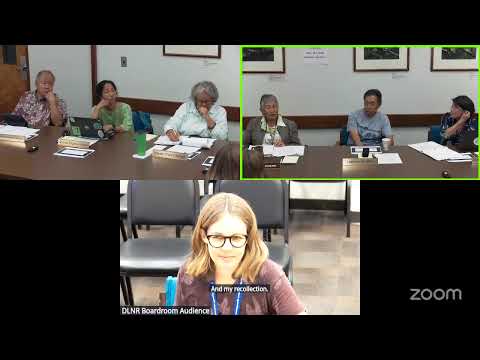
The Commission on Water Resource Management on Aug. 19, 2025 heard staff recommend authorizing Chair Dawn Chang to enter a memorandum of agreement with the Honolulu Board of Water Supply to receive a $2.4 million congressionally directed grant to seal abandoned state wells on Oahu.
Katie Roth, the staff presenter, said the funding “is a $2,400,000 congressionally directed [amount] routed through the Environmental Protection Agency, and it requires a 20% cost share, in the amount of $600,000.” The submittal names state well numbers 3‑4101‑005 and 3‑4101‑006 as priorities for sealing on Oahu, and Roth said the Board of Water Supply has reviewed and agreed to the tracked MOA language. She said the MOA would be routed to the Attorney General’s office for final review.
Why it matters: advocates and staff pointed to public‑health and contamination risks from abandoned wells and to the high cost of sealing older or hard‑to‑locate wells. Commissioners pressed staff on whether the funding is secure and who is responsible for long‑term enforcement and costs.
Commissioners asked about the firmness of the earmark and the application process. Roth said the funding is an earmark the agency expects to receive but the state must formally apply and satisfy federal and state compliance requirements before the money is disbursed.
The discussion focused on who must bear the cost of sealing wells when they fall out of use. Chair Dawn Chang argued that the burden “should not be should not fall upon a government. It should be borne by the person who bore all the benefits during the period of time they got to to use the water from the well.” Chang pointed to Land Board practice of using decommissioning bonds when approving leases with improvements and urged staff to consider permit conditions or bond requirements for well permits so permittees share future decommissioning costs.
A staff member explained current practice for well and pump permits: “They’re only, valid for 2 years, and they’re only issued to the well and pump contractor,” and staff added that permits do not currently impose an explicit requirement to abandon and seal a well when it is not in use. Staff said they sometimes exercise authority to require sealing in environmentally sensitive areas but acknowledged enforcement of the owner‑responsibility language has varied because of staffing and funding constraints.
Roth cited a portion of the water code that addresses abandonment: “There is a portion in the water code 174C‑87 about abandonment of wells that does state … when wells [are] abandoned the owner shall file and seal the well in a manner approved by the commission,” and she said the extent of enforcement has varied.
Next steps: The staff recommendation is that the Commission authorize the chair to enter into and finalize the MOA with the Honolulu Board of Water Supply and to permit non‑substantial editorial changes by the chair; Roth said substantial edits would return to the Commission for approval. The MOA will be routed to the Attorney General’s office for review and the staff said it plans to convene state and county partners, including the Department of Health and county water departments, to align priorities and funding pathways.
No formal vote on the MOA was recorded in the portion of the meeting provided.