Get Full Government Meeting Transcripts, Videos, & Alerts Forever!
Get email alerts on the Waste Management topic
No spam. Unsubscribe anytime.
Council hears proposal to require household recycling participation; staff notes prior voluntary policy and hardship exemptions
Summary
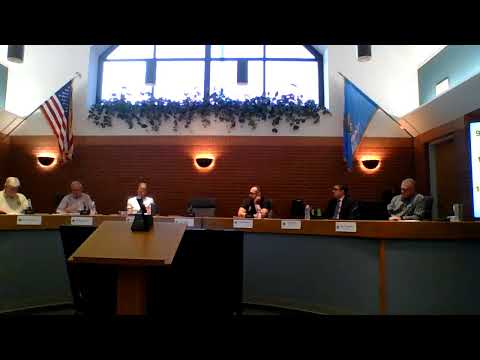
Council discussed Resolution 07-14-2025B to make household recycling mandatory; staff reminded the council that a 2010 resolution made recycling voluntary, that hardship exemptions exist and 33 customers are currently listed, and that recycling and sanitation contracts are combined, complicating per-customer fee calculations.
Speaker 2 introduced Resolution 07-14-2025B, proposing compliance and mandatory participation in household recycling services for residential customers. Speaker 1 summarized the program—ackground: "Back in 2010, I believe, in November, we passed a resolution 11 0 2 20 10 c, that basically made our recycling program voluntary." He said the city previously maintained separate recycling and sanitation contracts and that voluntary participation meant not all customers recycled and the fee structures were different.
Speaker 1 said hardship exemptions were intended to be reviewed annually and that the practice had not been consistently enforced; he reported "we have 33 people on it." He warned that combining sanitation and recycling into a single contract has made it difficult to calculate accurate cost savings per customer and that prior attempts to apply billing adjustments were administratively complex.
The transcript does not record a council vote on Resolution 07-14-2025B in the provided segments. The discussion focused on program history, exemption administration and contract structure rather than final action.
Next steps: the council will need clearer cost analyses and an implementation plan (including how hardship exemptions would be administered) before moving to a binding mandate or vote.