Get Full Government Meeting Transcripts, Videos, & Alerts Forever!
Get email alerts on the Zoning Ordinance Update topic
No spam. Unsubscribe anytime.
Sweetwater planning commission tables proposed zoning ordinance after crowded public hearing
Summary
The Sweetwater Planning and Zoning Commission heard a consultant presentation and hours of public comment on a proposed zoning and land-use ordinance intended to align zoning with the city’s 2022 comprehensive plan. Residents and business owners raised concerns about grandfathering, manufactured-home rules, and whether long-standing automotive businesses would face conditional-use restrictions; the commission tabled the proposal to Sept. 30 for further review.
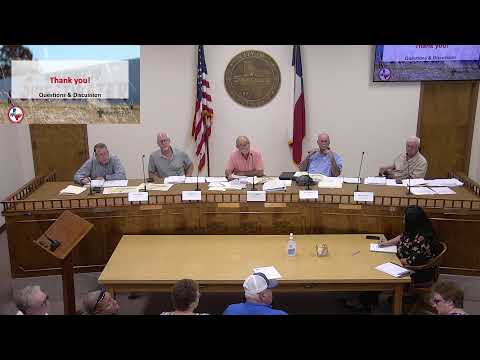
The Sweetwater Planning and Zoning Commission on Tuesday heard a presentation from consultant Ashley Woolsey of Kendig/Kist Collaborative on a draft zoning and land-use ordinance intended to align the city’s zoning map with the comprehensive plan the city adopted in 2022. After the presentation and hours of public comment, the commission voted to table the item and return to the matter at a special meeting on Sept. 30 at 5:30 p.m.
Woolsey described the update as a consolidation and modernization of zoning language and maps, including three residential districts (Suburban Residential, Traditional Neighborhood and Neighborhood Mix), four mixed-use and retail districts, and revised industrial and agricultural districts. She said the ordinance would add a consolidated use table, dimensional standards, graphic illustrations, and new categories like “limited uses” to allow objective, administratively approved uses rather than discretionary conditional uses.
The consultant said two overlay districts are proposed — a gateway overlay along Interstate 20 and several main corridors, and an infill overlay meant to relax some standards to encourage redevelopment — and new site- and building-design standards would apply in the downtown district to ensure compatibility with historic buildings. She also outlined new parking, landscaping and tree-preservation provisions, and a consolidated enforcement and nonconformity section.
Many residents who spoke during the public-comment period urged changes or asked for clearer protections for existing uses. Kirk Harris said he was concerned the draft would remove permitted manufactured homes from much of the city’s south side and questioned why some property owners did not receive notice; he said that would limit housing and property options in his neighborhood. "If you're rezoning the whole city, why did people not get letters?" Harris asked.
Several longtime business owners in the area around Pecan, Ash and Broadway told the commission that the draft zoning misclassifies long-established automotive and fabrication uses as General Retail (GR) or otherwise subjects them to conditional-use approval. Eric DuPont said the area has been an automotive neighborhood for decades and asked that the map reflect Light Industrial (LI) or similar zoning so routine automotive operations would not depend on discretionary decisions by reviewers. "This neighborhood here is incorrectly zoned," DuPont said. "It needs to be LI in our district." Other speakers who run family body shops and storage businesses said they fear losing the ability to rebuild or expand if nonconformities are treated as limited or if conditional-use approvals are imposed after years of operation.
Lauren Ruhl, founder and board president of a local nonprofit called the Life House, asked for clarity about vested rights after she described an in-progress transitional housing project near Pecan Street that has several foundations poured and about $100,000 already invested. Woolsey and staff said that state law grants vested rights when a project has approved site plans or building permits prior to adoption of a new ordinance, and suggested residents document approved permits or site-plan actions if they believe vested rights apply.
Woolsey said a late staff change would permit single-unit manufactured homes in the Traditional Neighborhood and Neighborhood Mix districts but not in the Suburban Residential district; she emphasized single-unit homes, not manufactured-home parks. She also told the commission that conditional uses in the draft are discretionary but could be converted to objective "limited uses" if the commission and council prefer more administratively predictable standards.
After hearing the presentation and public concerns, commissioners asked staff and the consultant for clearer, objective standards for automotive and other commercial activities, more detail on how grandfathering and vested rights would be applied, and additional time for map and text refinements. The commission then voted to table the proposal and scheduled a continued review for Sept. 30 at 5:30 p.m.; staff said that would likely move the city-council public hearing to October.
The Planning and Zoning Commission did not adopt the ordinance; it instead directed staff and the consultant to return with clarified wording and map adjustments. The item will be revisited on Sept. 30, and any recommendation from the commission would go to City Council for a final public hearing and potential adoption.