Get Full Government Meeting Transcripts, Videos, & Alerts Forever!
Get email alerts on the Budget topic
No spam. Unsubscribe anytime.
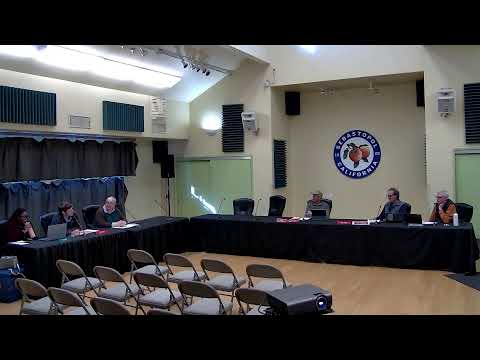
Sebastopol committee weighs storm-drain cover art and how to spend roughly $22,000 in the art fund
Summary
Committee discussed using available art funds (a working figure of about $22,000) for rotating stipends and a proposed program to paint storm-drain covers (city inventory ~800, with roughly 150 large paintable covers), versus saving for a permanent north-entry sculpture; staff to produce a map and assemble a subcommittee for site verification.
The Sebastopol Public Arts Committee reviewed options for using the city’s modest public-art fund and considered a Windsor-inspired program to paint storm-drain covers as a way to distribute art more broadly around town.
Staff described the current art-fund picture as roughly $20,000–$23,000 and used $22,000 as a working number. Committee members reviewed recent commission amounts: the Ned piece is budgeted at approximately $40,000 and a Michael McGinnis library piece at about $30,000 — sums already accounted for in prior approvals — and discussed whether remaining funds should be reserved for a permanent north-entry sculpture or used for smaller, rotating stipends and site-based projects.
On the storm-drain idea, staff and committee members cited Windsor’s model: a stipend (Windsor used $800) per project with a five-year refresh. Staff said the city’s storm-drain inventory contains about 800 covers in total, but that many are small or iron textured and only a subset (staff estimated perhaps 150 of the larger concrete lids) would be suitable to paint. The committee discussed technical safeguards — sand or textured primer to prevent slippery surfaces and an anti-graffiti topcoat — and emphasized choosing high-pedestrian locations for visibility.
Committee next steps: staff will ask public-works to extract a community-facilities GIS layer and produce a legible PDF map. Committee members agreed two volunteers could meet with Public Works (Eric Billings, assistant superintendent) to review the hard-copy map, identify candidate covers and photograph sites to assess paintability and safety.
Why it matters: The conversation framed a choice between preserving the art fund toward a larger, permanent work and using modest stipends to activate many small public sites; the storm-drain concept offers a lower-cost way to involve local artists but requires coordination with public works on safety, maintenance and permitting.
Notes on numbers: the 800-cover inventory and the estimate of ~150 paintable covers come from staff’s description in the meeting and were presented as an approximate inventory rather than a final count.