Get Full Government Meeting Transcripts, Videos, & Alerts Forever!
Get email alerts on the District Budget topic
No spam. Unsubscribe anytime.
Sumner-Bonney Lake CFO outlines preliminary 2025–26 budget, warns of federal-program uncertainty
Summary
Chief Financial Officer Brian Berley presented the district’s preliminary 2025–26 budget, projecting general-fund revenues of roughly $207 million, expenditures near $215 million and a falling fund balance; he warned that about $400,000 in federal program funding is uncertain and said staffing and benefit costs are the largest expense drivers.
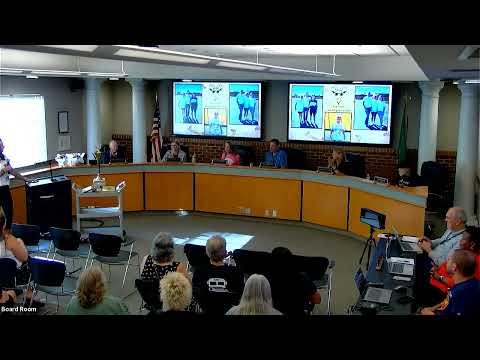
Chief Financial Officer Brian Berley presented the Sumner Bonney Lake School District’s preliminary 2025–26 budget during a special budget hearing on July 16, saying the document is a point-in-time plan required by state law and will come to the board for adoption next month.
Berley gave high-level figures for the general fund and said the district expects about $207 million in general-fund revenues and general-fund expenditures of about $214.9 million plus a $2.6 million transfer to capital projects. He said the district projects enrollment growth of roughly 50 students (about 0.5 percent) and described the prototypical funding model as roughly $11,000 per full-time-equivalent student.
On revenue, Berley said local levy revenue is rising by about $4.5 million and the state general apportionment is increasing roughly $3.4 million, of which about $2.4 million reflects a 2.5 percent IPD adjustment. He also identified MSOC adjustments (quoted in the presentation as about $37 per student) and special-education formula changes as contributors to revenue growth.
On expenses, Berley said people costs account for roughly 84 percent of the budget and called out newly bargained certificated salary costs (about $6.8 million), step/column movement, rising employee-benefit premiums through SEBB, higher out-of-district special-education placement costs (about $1 million), and increased property/liability insurance (about $500,000). He estimated employer medical insurance share figures in the presentation and said retirement-rate decreases partially offset some costs.
Berley warned that certain federal programs (the presentation cited Title II, Title III and smaller programs) total roughly $400,000 and that federal decisions could put that funding at risk; although small as a percentage of total revenue, loss of those funds could require reallocation of district resources to sustain affected programs.
The CFO projected a beginning fund balance near $35 million, expected revenues and expenditures that would leave a projected fund balance of about $25 million — a decrease of roughly $10.1 million over the year — and said the district maintains reserves to smooth cash flow, protect bond ratings and respond to unexpected events. Berley offered to meet with board members or community members to walk through the 232-page supporting document and said a four-year forecast is included but depends on trends and possible adjustments.
No public comment was offered during the budget hearing; the board returned to the regular agenda after the presentation.