Get Full Government Meeting Transcripts, Videos, & Alerts Forever!
Get email alerts on the Local Budget Tax Warrant topic
No spam. Unsubscribe anytime.
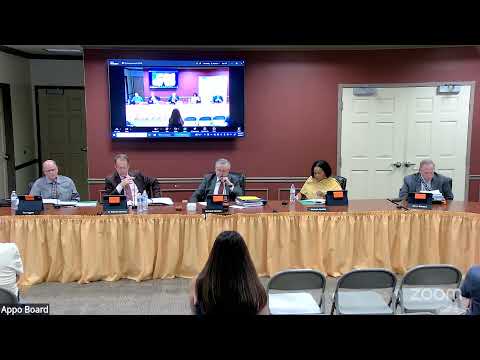
Appoquinimink board sets tax warrant after heated public criticism over $4.9M shortfall
Summary
After weeks of updated reassessment data and public outcry over a nearly $5 million budget shortfall, the Appoquinimink School District board adopted a tax warrant that raises the operating rate to 35.41¢ per $100 assessed value, plus set debt, match and tuition tax components.
Appoquinimink School District trustees voted July 8 to set the district's tax warrant, adopting a general operating tax rate of $0.3541 per $100 of assessed value (35.41¢) after a lengthy presentation and public comment. The board also approved a 7.5¢ debt service tax, a 3.41¢ match tax and a 17.43¢ tuition tax.
Finance staff said the vote was driven by three budget pressures: an estimated $1 million in higher utility costs across 24 buildings, a rising special‑education population and underestimated stipend/RISE program costs of about $2.8 million, plus an accounting projection error that left the district with significantly less carryover than earlier reported. Scott Kessel, assisting during the CFO transition, told the board the district received updated assessed values from New Castle County on July 7, the first full reassessment since 1983, and used standard assumptions including a 2% delinquency allowance and an at‑risk appeals figure reported as $245 million.
Kessel said the district's recommended operating rate (the reassessment conversion plus a 10% allowance used in a reassessment year) would produce roughly $54.4 million in operating revenue. He explained the four tax components the board sets: operating (current expenses), debt service (capital bond payments), match taxes (state match programs) and the tuition tax (statutory funding to cover special‑education placements).
The discussion centered on whether to adopt the full 10% reassessment allowance. Board members pressed finance staff on the practice of subtracting the full value of properties "at risk" from the tax base while also using a 10% allowance; finance staff and the superintendent said the practice follows county and local precedent for reassessment years. County reassessment activity added previously unassessed properties (large retailers and recently built homes) into the base this year, which increased the assessed base and reduced per‑penny revenue impact.
Public comment before the vote was strongly critical of the board and district leadership. Multiple residents said they learned of the shortfall from a WDEL article the morning of the meeting and called for greater transparency, an independent audit and clear answers about how a $4.9 million projection error occurred. Speakers asked why an extra May payroll and summer‑school spending were not properly accounted for and warned that repeated tax increases would erode public trust and jeopardize future referendums.
In response, the board chair said the shortfall reflected errors in a financial projection: a third payroll in May (about $2.1 million) and summer‑school expenditures posted to the wrong budget lines, not funds taken or missing from district accounts. The superintendent and finance staff committed to a detailed report on how the errors occurred and to strengthening internal controls.
Procedurally, the board set debt, tuition and match taxes first (7.5¢, 17.43¢ and 3.41¢ respectively) by voice vote. An initial motion to set the general operations rate at 35.41¢ was defeated after debate; the board then considered alternatives and finance models. After further discussion and a finance "what‑if" modeling review, the board adopted the financial advisory committee's recommendation for the operating rate (the conversion rate plus the 10% reassessment allowance) by voice vote; one trustee registered an abstention. Finance staff warned that selecting a lower percentage would require additional cuts beyond the $2.5 million in reductions already identified and could risk state financial recovery oversight if cash‑flow shortfalls persisted.
The board directed staff to produce a detailed, public report of the accounting errors, the timeline of discovery and recommended fixes, and to bring a more complete set of corrective actions to the public in coming months. Trustees and staff said the district will continue work on hiring a permanent CFO, implementing the $2.5 million in targeted cuts, and preparing a preliminary FY26 budget (approved this evening as a conservative placeholder) with amendments to follow.
The board will submit the adopted rates to New Castle County by the statutory deadline later this week.