Get Full Government Meeting Transcripts, Videos, & Alerts Forever!
Get email alerts on the Real Estate Sale topic
No spam. Unsubscribe anytime.
Madison County approves resolution authorizing conveyance of county property to local developer
Summary
After a brief public hearing with no public comment, Madison County voted to approve a resolution authorizing the chairman to enter a contract to convey county-owned real property to a local developer; the clerk recorded 1,272 votes in favor and the resolution passed.
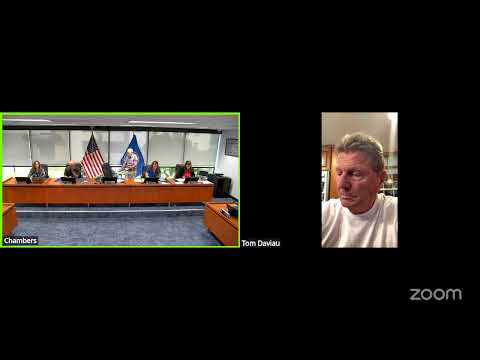
Madison County opened a public hearing and then approved a resolution authorizing the chairman to enter into a contract to convey county-owned real property to a local developer corporation for economic development.
The hearing was opened by an unnamed member who moved to begin the public hearing “for the sale of real estate owned by Madison County to local developer corporation for the purpose of promoting economic development of said real real property that is no longer for use by the county,” and the panel heard no comments from the public. The hearing was closed on a subsequent motion and second.
The resolution presented for a vote was described by a meeting participant as authorizing “the chairman to enter into an account into a contract to convey real property.” At SEG 089 the speaker who had been speaking earlier identified herself as Yvan Schwartz, chairwoman planning committee. An unidentified member moved to adopt the resolution, saying, “Mister chairman, I move this resolution for adoption.” A second was called and discussion was requested. The clerk then conducted a roll-call style reading of members; multiple members’ responses were recorded as “Aye” or “Yes.” The clerk reported “1,272 votes in favor,” and the resolution was announced as passed.
Earlier in the meeting the clerk recorded “1,259 votes present” during roll call; three members (Reger, Reuter and Stokes) were recorded as absent in the roll-call exchange. The record presented at the meeting contains both the roll-call attendance and the final tally reported by the clerk; no explanation for the difference between the two recorded numbers was given during the session.
No formal amendments or recorded objections to the measure were noted in the transcript. Following the vote the meeting moved to adjournment.
The next procedural step noted on the record is the clerk’s announcement that the resolution passed; no additional scheduling or implementation details for the conveyance were provided on the record.