Board examines $1 million budget shortfall as ESSER funding expires, explores staff and program options
Loading...
Summary
At a work session, board members reviewed a roughly $1,000,000 school budget gap caused by expiring ESSER funds and the loss of about 40 students, discussed using retirements, buyouts, targeted raises, insurance contribution changes, and local revenue options to close the gap.
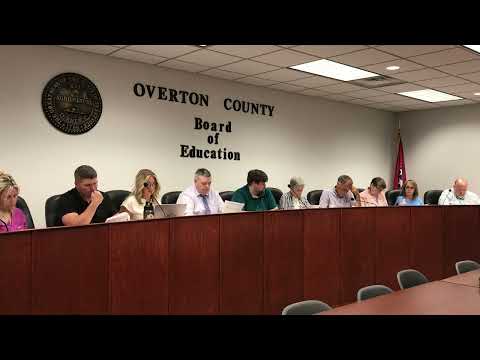
Board members discussed a projected $1,000,000 shortfall at an Overton County school work session and traded a range of staffing, benefits and revenue options to narrow the gap.
The presiding speaker (S1) said the end of ESSER/COVID funds and an enrollment decline of about 40 students together produced the shortfall; S1 estimated the 40‑student loss cost the district roughly $400,000 in revenue. “We lost about 40 … those 40 students … cost us around $400,000,” S1 said.
Board members reviewed recurring and one‑time costs that contribute to the gap. S3 said after‑school programming is expected to cost approximately $230,000–$250,000 next year. S3 also outlined special education as primarily federally funded but said federal funds must supplement, and the district still bears many special‑education costs. Substitute teacher costs were cited at about $260,000.
Members discussed debt‑service and local revenue: S3 explained wheel‑tax receipts go to debt service and the district has used fund balance to cover differences between wheel‑tax receipts and loan payments; board members noted bond payoffs this year could reduce debt service next year by about $200,000. The board also discussed whether the county continues to allocate growth on the local option “penny” to schools and whether to reintroduce a local option sales tax on the ballot, noting a previous failed attempt.
Potential expense reductions and revenue strategies included absorbing positions through retirements and resignations, offering buyouts, revising insurance contributions (S1 said charging 20% of insurance premiums to employees would close the deficit in the board’s example), and adjusting teacher pay raise strategies. Some members warned that splitting raise amounts (e.g., giving certain teachers $2,500 and giving others $1,000) risks pay‑compression problems; others favored across‑the‑board raises for equity reasons.
S2 objected to the idea of approving a sizable director raise while asking lower‑paid staff to absorb insurance costs; S1 responded the director had not previously received raises due to a signed contract and emphasized the raise was an option to be considered.
Board members requested additional detail on large line items (communications/phone services, electricity), legal services spending (a $30,000 budget line that S3 said has already been exceeded), kindergarten enrollment trends, and the timing of new state funding (TISA/BEP) relative to enrollment changes. S1 asked members to review materials, directed follow‑up questions to Dr. Holman and staff, and adjourned the work session.
No formal votes were recorded during the work session; board members agreed to return the corrected contract and budget details to the packet for the next meeting.