Get Full Government Meeting Transcripts, Videos, & Alerts Forever!
Get email alerts on the Education Budget topic
No spam. Unsubscribe anytime.
Pulaski County school board approves FY25–26 budget with 3% pay increase; insurance costs cited as driver
Summary
The Pulaski County School Board approved the FY25–26 operating budget that includes a 3% employee raise and a proposed one-time or phased bonus; staff said insurance claims drove a roughly 39% average increase in premiums and the budget is conservatively overfunded to manage potential local job losses.
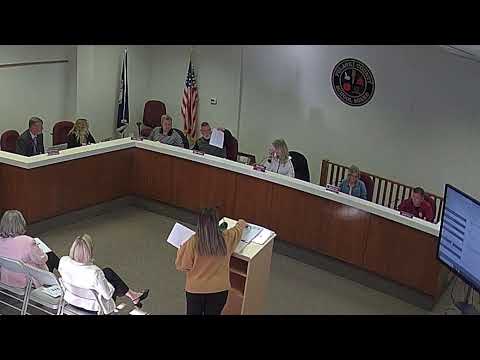
The Pulaski County School Board approved the fiscal year 2025–26 operating budget on a voice vote, adopting the version presented on the screen that includes a 3% raise for employees.
Board chair (identified in the transcript as Speaker 2) called for a motion to approve the budget; a board member moved and another seconded before the board voted with all present indicating assent.
Staff framed the proposal as preserving a 3% salary increase for employees while avoiding additional local tax burden. Morgan (first referenced in the transcript at SEG 218 and who responded to the chair during the meeting) told the board, “I definitely like that we get to keep, a 3% raise for employees,” and noted that art and music teachers were included among priorities raised by staff and teachers.
Why it matters: administrators said recent insurance claims and years of not increasing premiums have depleted the district’s reserves and forced a significant insurance-cost adjustment. A presenter (Speaker 10) summarized the insurance analysis by stating, “Overall, the average was 39%,” referring to the reported average increase in insurance cost across plan options. Staff showed a graph comparing claims (green) and the fund balance (yellow) to illustrate why premiums and fund contributions must rise to rebuild reserves.
Board discussion covered options to limit future volatility, including small annual premium increases and joining a consortium of self-funded groups with neighboring jurisdictions to spread risk. Staff also proposed a potential bonus for employees to offset take-home impacts; administrators said a target $1,000 bonus (costed at about $1,100–$1,200 after payroll taxes) was possible depending on year-end funds.
Officials flagged external economic uncertainty as a reason for conservative budgeting. Staff said they intentionally over-budgeted rather than count on uncertain savings tied to potential local layoffs (for example, anticipated reductions at a nearby employer discussed in the meeting).
Before the vote a board member asked for and received confirmation that the version on the screen was the 3% raise option. After the motion passed, staff committed to provide a year-to-date budget comparison that breaks out local, state and federal revenue and shows percentage changes for key line items to help board oversight going forward.
The board approved the budget; staff will provide follow-up financial reports requested during the meeting.