Get Full Government Meeting Transcripts, Videos, & Alerts Forever!
Get email alerts on the Social Services topic
No spam. Unsubscribe anytime.
Meeker County HHS outlines child‑protection workload, staffing and system challenges
Summary
HHS supervisors reported rising intake volumes, staffing structure, licensing counts and concerns about state mandates and the antiquated SSIS case system; commissioners praised staff and asked for continued oversight and training.
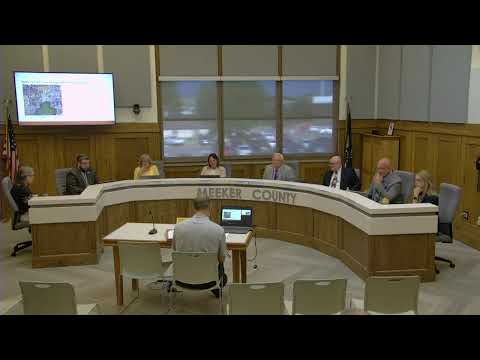
Meeker County Health & Human Services on Aug. 25 briefed commissioners on the workload and operations of the Intake, Licensing and Child Protection Unit, reporting intake volumes, staffing levels and several operational challenges tied to state and federal requirements.
Kristen Langerman, who supervises the Intake, Licensing and Child Protection Unit, said the unit comprises 10 staff: five child protection workers, one truancy worker, one parent‑support outreach worker, two intake/licensing staff and a case aide. Langerman reported the unit screened “over 2,000 reports and intakes” in 2024 and had received more than 1,200 reports in 2025 as of the week she pulled the numbers, indicating the county is on track to meet or exceed last year’s volume.
Langerman described the unit’s protocols: child protection reports are screened within 24 hours, some responses require seeing an alleged victim within 24 hours and assessments require a five‑day response. She said staff coordinate with a multidisciplinary team that includes the county attorney’s office and local law enforcement.
Commissioners asked about licensing trends, safety for staff conducting home visits and how the unit handles situations requiring law enforcement. Langerman said the county has 13 child foster care homes, three adult foster care homes, 16 community residential services and 28 family child‑care licenses; emergency licensing processes are in place for relative placements.
HHS staff raised concerns about several external changes that add documentation and program requirements, including Family First Prevention Services Act (FFPSA) fidelity obligations and new screening requirements tied to recent legislation. Langerman noted the term “active efforts” in some statutes lacks precise definition and complicates documentation and court presentations. She said staff are pursuing training and partnering with local entities to meet requirements.
Staff and commissioners also criticized the state SSIS case‑management system as antiquated and duplicative; Langerman said, on recent days, SSIS had taken up to 30 minutes to log in and that multiple data fields must be entered in separate tabs, increasing staff workload.
Commissioners thanked the HHS team, expressed concern about staff safety and burnout, and emphasized the county will continue to advocate for training, modernization and adequate resources. Langerman said the office will continue efforts to prevent out‑of‑home placements when possible, use voluntary services for screened‑out reports and coordinate with schools for truancy and early intervention outreach.
The board took a short recess after the presentation and then returned to business.