
Cumberland committee reverses June start-time change after new bus-cost estimates and funding concerns
Get AI-powered insights, summaries, and transcripts
Subscribe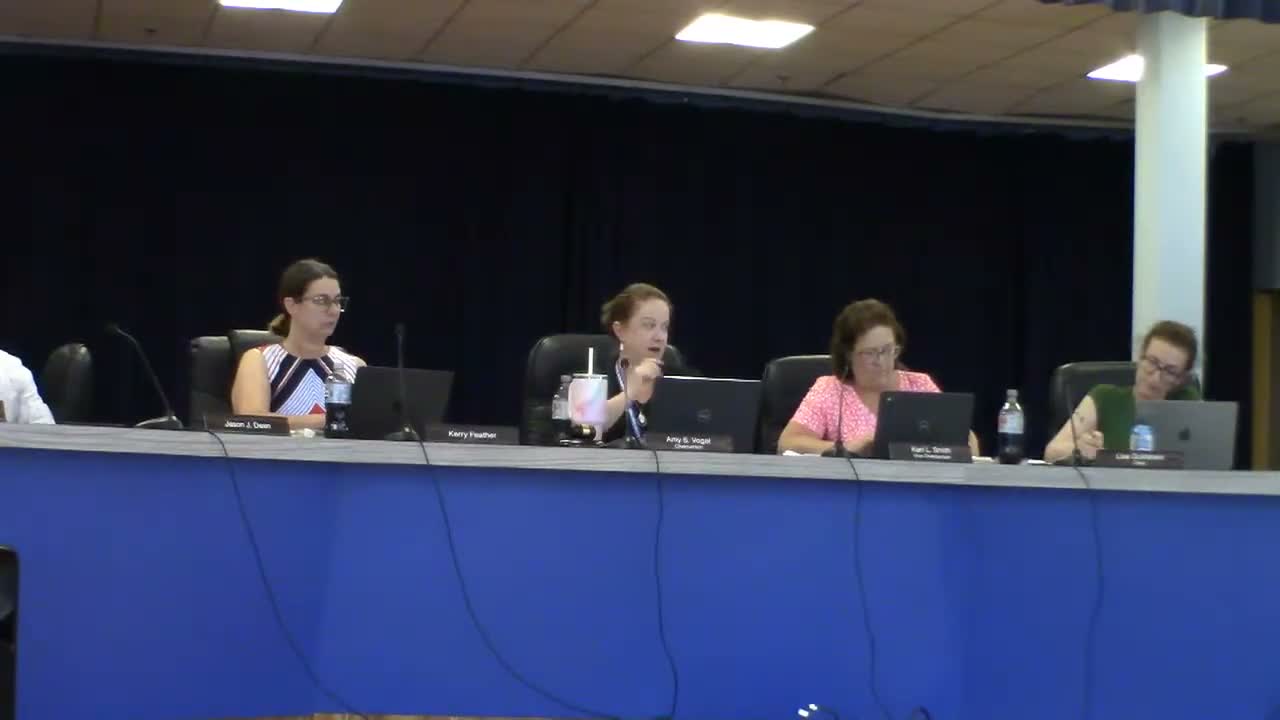
Summary
Facing a newly reported potential $400,000-plus cost for added buses and uncertainty about federal grant funding, the Cumberland School Committee voted July 3 to reverse its June 26 decision to change elementary and middle school start times and directed further study and a July 17 vendor briefing.
The Cumberland School Committee on July 3 voted 4–2 to reverse a June 26 decision that would have changed elementary and middle school start times, citing newly reported estimates for additional buses and uncertainty over federal grant funding.
The reversal followed a night of questioning about how Durham, the district's transportation vendor, arrived at an estimate described at times as “north of $400,000,” and whether recent data and routing inputs supported such a rapid change. The committee first voted 5–1 to allow reconsideration and then voted 4–2 to restore the prior bell-time model used in the 2024–25 year.
Why it matters: Members said the cost would be a recurring budget pressure and that the timing of the new estimate — delivered shortly after the June vote — left inadequate time to vet routing assumptions. “I will be changing my vote to go back to the start times that were recommended by Doctor Thornton,” said Ms. Feather, who moved the reconsideration, citing the timing and fiscal risk. Ms. Smith said she did not “feel that Durham is operating in good faith” after receiving the higher estimate.
What the committee heard: District official Doctor Thornton summarized the issue for the committee, telling members that Durham’s routing work suggested an added need for up to four buses and outlining several funding pressures. Thornton also said the district learned that Title I funding looked secure but that Titles II–IV could be reduced or go to zero — a change that would worsen the district’s fund-balance projections.
Durham’s representative told the committee routing had begun but that final runs depend on outstanding inputs — including kindergarten and pre-K student counts — and explained that changes in bell times reduce turnaround or "roll" time between tiers, which can force the use of additional buses. In response, a committee member asked for a concrete timeline and routing evidence: “I need something in front of me for someone ... to say, bus 1 goes from this road to this road ... and then bus 1 has 40 minutes to get to the next school,” said Ms. Feather.
Numbers and capacity cited during the meeting included: an earlier estimate that surfaced after the June vote (about $180,000), the $400,000-plus figure that prompted the reversal, 179 students reported as needing specialized transportation, and 10 special-needs buses currently in use. District staff said special-education programming has expanded to five elementary-based programs, which typically rely on minibuses and affect fleet needs.
Next steps and study options: The committee directed further work rather than immediately adopting new times. Thornton said the vendor Transpar (vendor name used in meeting) will present at the July 17 meeting; he described a baseline consultancy price of $14,000 for an interdistrict-efficiency review with optional boundary analysis to come later. Several members urged a comprehensive outside study and the creation of a transportation/boundaries subcommittee; counsel and members flagged that the subcommittee could review directory-level student information and recommended amending the district's FERPA-related policy before the group begins work.
Formal actions taken: The committee approved the agenda at the start of the meeting (6–0); it voted to permit reconsideration of the June 26 start-time vote (5–1); it subsequently voted to reverse the June 26 decision and revert to the prior bell-time model (4–2). A motion to commission a comprehensive study was discussed and later withdrawn/held pending agenda and policy work. The meeting adjourned 6–0.
What committee members said about the process: Several members said the rapid shift in cost estimates undermined confidence in the timetable for implementing changes and in Durham’s assumptions. "The whole process has been exhausting, debilitating, and depressing," said one member who announced she would change her vote. Others argued the district should continue pursuing earlier start times in a way that is sustainable and supported by a thorough, externally reviewed routing study.
The committee also discussed exploring depot stops, neighborhood-consistent routing, and limited opt-in/opt-out processes as potential efficiency measures. Counsel warned that any opt-out system could prompt appeals to the state education agency (RIDE) and carry unintended costs.
The committee expects vendor Transpar to present routing and efficiency options at the July 17 meeting; members agreed to table formation of a transportation and boundary subcommittee until FERPA policy language is revised to permit safe handling of directory-level student information.