Get Full Government Meeting Transcripts, Videos, & Alerts Forever!
Get email alerts on the School Facilities Programs topic
No spam. Unsubscribe anytime.
District proposes SLiCE program to give schools $250,000 a year for site‑driven upgrades
Summary
Jonathan Ellwein introduced SLiCE (School‑led Initiatives for Capital Enhancements), proposing about $250,000 a year from the building fund to let principals propose mostly cosmetic, standards‑bounded projects; projects must comply with North Dakota Century Code section 57‑15‑17 and be approved through district staff.
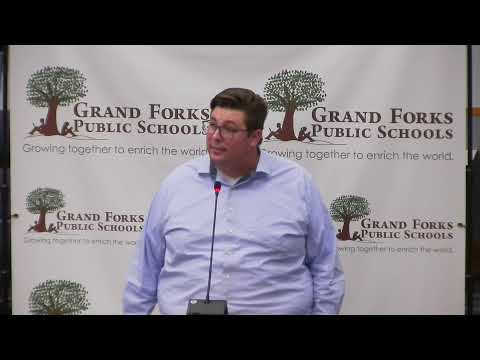
Jonathan Ellwein, the district staff member presenting the item, proposed SLiCE — "School‑led Initiatives for Capital Enhancements" — as a pilot that would allocate roughly $250,000 a year from the building fund and rotate funding across schools on a three‑year cycle so each site can propose smaller, locally prioritized projects.
Ellwein said SLiCE is intended to let building leaders identify improvements that matter to students and families while fitting inside district standards. "This is what I've dubbed SLiCE," he said, and stressed the money "must comply with North Dakota Century Code section 57‑15‑17" and come from the building fund. He described allowed work as building improvements (not furniture, supplies or personnel) and said the program is meant mainly for cosmetic or community‑facing changes such as new carpet, paint and walkways.
Board members asked for guardrails. President Berger asked whether superintendents had been involved; Ellwein said he had informed Doctor Brenner but had not fully brought superintendents into the process. Doctor Lund and others praised the front‑line focus: "If you really want to know how processes are working, go to the front line," Lund said. Multiple members asked what would stop principals from proposing "frivolous" projects; Ellwein said Buildings & Grounds would provide a backstop and that projects must meet district standards.
Ellwein outlined how the allocation would work in practice: site leaders would submit prioritized project lists (for example, two to five candidate projects depending on the site allocation), staff would vet feasibility and costs, and procurement would proceed for the selected work. For most projects at the proposed dollar amounts Ellwein said the district likely would not need to hire outside design services; if a project required design, those costs would come from the project's allocation.
Ellwein gave initial examples by school and said the district would reassess the model after a three‑year cycle. He described the program as a "living document" and said he will schedule meetings with principals to develop concrete plans and return a refined proposal to the facilities committee. The committee did not take a vote on SLiCE; Ellwein asked for board support to move forward with planning and said he would present a final proposal at a future meeting.