Get Full Government Meeting Transcripts, Videos, & Alerts Forever!
Get email alerts on the Stormwater Runoff Erosion topic
No spam. Unsubscribe anytime.
Residents say runoff from Highlands Phase 2 flooded yards, council to discuss in closed session
Summary
Two residents told the Washington City Council that runoff and removed storm-sewer features at the Highlands Phase 2 development have caused erosion, silt deposits and a flooded basement; one resident said a site worker entered his yard and threatened him. Council said the complaints will be discussed in closed session.
Two Washington homeowners told the City Council that construction at the Highlands Phase 2 subdivision has caused runoff, silt and erosion that have damaged private property and flooded a basement.
"My property was now vulnerable," said Mark Gandenoff, who identified himself as living at 313 Emily Lane. Gandenoff told the council that plans he reviewed in March showed storm sewers and inlets along the property line but that the developer’s submitted plans removed those features. He said repeated storms left silt on his lawn, deposited runoff into a neighbor’s pool and flooded the basement at 2209 Anniston Drive.
Gandenoff said he raised the issue with city staff and the developer’s project manager, Ben Ruther, and that he sent staff photos and videos documenting the runoff. "I've yet to receive response from Ben 4 months later," he said. He described a June encounter in which a worker he identified as Kurt drove an excavator onto an embankment, stepped onto Gandenoff’s private property and, Gandenoff alleged, berated him and threatened him.
"Everything Mark stated has been true," said Brandy Hagenorn, who said she lives at 309 Emily Lane and described similar runoff and silt in her yard. Hagenorn told the council many existing homeowners feel overlooked as new development proceeds and that some neighbors are afraid to speak up because of the developer’s relationship with the city.
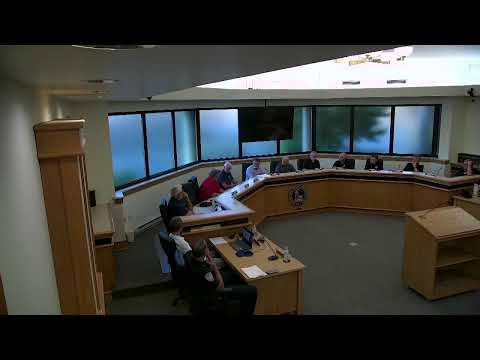
Council members acknowledged the residents’ statements and said the matter should be discussed out of public view. "We probably need to talk about that in closed session," a council member said on the record. Later in the meeting the council voted to hold a closed meeting "to discuss personnel, legal, and real estate matters pursuant to Section 610.021, RSMo." The public portion of the meeting then transitioned to executive session.
The residents said they had tried to work with the developer and with city staff, naming city staffers and the developer’s project manager in correspondence and meetings. Council did not announce a timetable for follow-up or any immediate enforcement action during the public session. The council’s move to closed session leaves unresolved whether the city will require the developer to restore the removed stormwater features or take other corrective steps.
Next steps: The council entered executive session to discuss legal and real-estate matters. The residents said they want the city to inspect the site, restore protective stormwater measures and prevent recurrence; the transcript records the residents’ requests but does not show any formal directive taken in open session.