Get Full Government Meeting Transcripts, Videos, & Alerts Forever!
Get email alerts on the Open Meeting Law topic
No spam. Unsubscribe anytime.
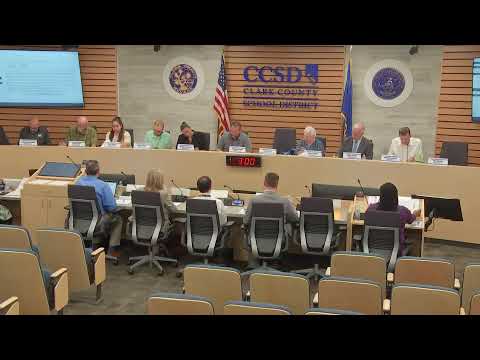
CCSD ASAC hears legal briefing on Nevada open-meeting law
Summary
John Okazaki, general counsel for the Clark County School District, reviewed Nevadas open-meeting law with the Attendance Zone Advisory Commission on Sept. 23, focusing on quorum rules, exemptions, notice and public-comment requirements and potential penalties for willful violations.
John Okazaki, general counsel for the Clark County School District, told the Attendance Zone Advisory Commission at its Sept. 23 organizational meeting that Nevadas open-meeting law exists to keep public bodiesconduct open to the public, and urged members to default to transparency when in doubt. "The idea behind the open meeting law is that public bodies, the conduct, the actions and and conduct of the government that they're, the public bodies should be open to the public," Okazaki said.
Okazaki said the law applies to committees of a governing body, including ASAC, and walked members through what constitutes a meeting. He noted ASAC has 12 members and that seven members constitute a quorum, meaning the commission must avoid taking action or deliberating on actionable subjects when a quorum is present outside a posted meeting. "So the first requirement for a meeting is a quorum," he said. "So if you have 6 people meeting, you don't have to worry about the open meeting law because there's no quorum. But if there's at least 7 of you... you have to be careful not to talk about any issue that could potentially come before you on the agenda."
Okazaki outlined two common exemptions: attorney-client consultations with district counsel and certain negotiation meetings. He cautioned, however, that exempt gatherings are distinct from non-meeting social gatherings and that serial electronic communications among members can be treated as a meeting if they effectively involve a quorum.
He reviewed notice and agenda requirements: agendas must be posted at least three working days before a meeting and provide a clear statement of items for action, time/place, and contact information for materials. He described acceptable public-comment formats (either comment periods before/after the agenda or comment after each action item) and emphasized the recommended practice of deliberating on an item first and then taking public comment on it.
Okazaki also explained meeting-record requirements and possible consequences for violations. "Meeting minutes are mandatory," he said, and must be approved at the next meeting. He described the complaint process and warned that those who knowingly participate in a willful open-meeting-law violation could face misdemeanor charges, while noting that following the advice of counsel is a defense.
The presentation closed with a summary reminding members that ASAC must comply with open-meeting requirements, provide public comment opportunities and follow agenda-posting rules; Okazaki answered a brief round of clarifying questions from commissioners before the meeting continued.