Get Full Government Meeting Transcripts, Videos, & Alerts Forever!
Get email alerts on the Unsafe Structure topic
No spam. Unsubscribe anytime.
Hopkinsville board finds 1820 S. Virginia St. unsafe, orders penalties and abatement
Summary
The Hopkinsville Code Ordinance Enforcement Board found 1820 South Virginia Street an unsafe structure after code and fire department testimony outlining sewage, structural damage, overloaded electrical wiring and unsanitary conditions; the board approved a violation finding, moved to assess maximum fines and authorized abatement pending utility termination.
Rodney Davis, chair of the Hopkinsville Code Ordinance Enforcement Board, on Aug. 12 opened a public hearing on Case CEBPM25-O7006 and heard sworn testimony that 1820 South Virginia Street has long-standing and escalating code violations.
Code enforcement officer Mark DeArmond testified that complaints dating to October 2023 documented raw sewage on the property and subsequent inspections in 2024 and 2025 showed persistent exterior neglect, broken windows, missing siding and plastic sheeting hung from ceilings. DeArmond said an interior inspection conducted after a search warrant found missing ceilings, sagging and rotten floors, pervasive animal feces, used syringes and extensive electrical misuse. "The owner has allowed the structure to become a nuisance," DeArmond said, and he recommended the board treat the property as an unsafe structure.
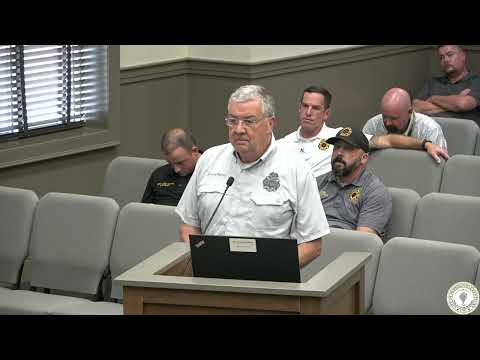
Fire Chief Steven Futrell, also sworn, described the safety risk posed by improvised electrical connections and overloaded outlets. "The day after the inspection, we had the electric meters pulled due to the condition of the structure. We were scared that the building was gonna pitch fire," Futrell said, citing life-safety concerns that prompted meter removal.
After hearing testimony, the board closed the hearing for deliberation and a member moved that the property was in violation; the motion was seconded and the board approved the finding by voice vote. The board then debated penalties and a member moved to assess the maximum fine and administrative costs and to abate the entire property, including accessory structures. The motion carried by voice vote. The board directed staff to coordinate abatement timing with utility termination (Atmos) and to secure the site—boarding, locking and HPD drive-by checks—if demolition cannot proceed immediately.
The code officer reported the structure met a large proportion of the ordinance criteria for unsafe structure (DeArmond cited 78% of exterior criteria and a 15 of 20 or 75% overall measure in his presentation) and noted a history of repeated calls for service and earlier citations, including a 2023 sewage violation. DeArmond also told the board he had attempted regular and certified mail notification and had posted notice; the property owner, listed in PVA records as Timothy Vandiver, called the office on the day of the inspection but did not appear at the hearing.
The board emphasized public-safety considerations and the need to deter repeat offenders. Members discussed legal remedies, liens and the possibility of pursuing personal judgments against owners who repeatedly allow properties to deteriorate. Board members also noted they will seek coordination with the fire department and public works before any demolition to ensure gas lines are safely terminated.
The board’s action closes the administrative hearing phase and authorizes staff to move forward with abatement and enforcement steps; the file will reflect the default fines, administrative fees and any lien recorded against the property.