Get Full Government Meeting Transcripts, Videos, & Alerts Forever!
Get email alerts on the Redevelopment topic
No spam. Unsubscribe anytime.
Council approves multiple redevelopment financial agreements; residents press persistent parking concerns
Summary
Councilors gave second-reading/final-passage votes on several financial agreements for redevelopment projects (East 25th St, Broadway parcels and others) while residents repeatedly raised concerns about pilot lengths, unit counts, and insufficient parking; staff said some projects include community-benefit payments.
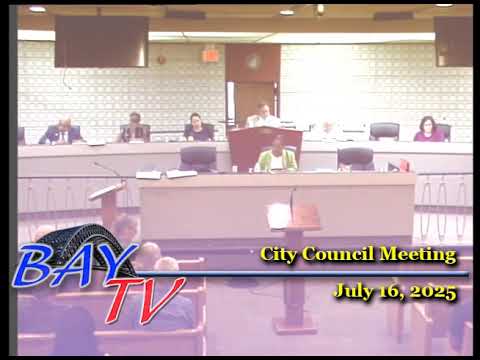
At the July 16 meeting the Bayonne City Council took final action on a series of redevelopment-related ordinances and financial agreements and held public hearings on multiple parcels along Broadway and in other parts of the city.
Projects taken up by the council included agreements for Block 442 Lot 14 (80–84 East 25th Street), 211–217 Broadway (Block 305), 474–476 Broadway (Block 205), and additional sites discussed later in the agenda. For each ordinance the council read the titles, opened the hearing for public comment, and — when no valid written protests were filed — closed the hearing and moved resolutions ordering final passage. Roll-call votes recorded "Aye" majorities for the ordinances brought forward in the session.
Residents used each public hearing to press similar themes: how long pilot terms last (speakers cited 20–25 years on recent projects), whether projects include affordable or workforce housing (one speaker was told "No"), and whether on-site parking will meet demand. "So we're at a 2-plus ratio [of people to parking spots]," a resident warned when a 30-unit development was reported to provide 32 parking spaces.
Staff and outside financial advisers explained that some pilot agreements include community-benefit payments and that financial agreements sometimes reflect lender assignments rather than changes to previously approved terms. Planning staff detailed site constraints — curb cuts, sidewalk widths, setbacks, and a maximum dwelling-count cited for one parcel (up to 65 units) — and reiterated that some unit-mix choices are resolved during site-plan review and technical review committee processes.
On finance details, a staff representative said the administration had negotiated a $78,000 community-benefit payment on one project and referenced a separate project expected to generate $288,000 toward community benefit. Developers’ counsel and advisers told the council that infrastructure and parking commitments are negotiated in redevelopment agreements and site plans, and they noted challenges lenders impose when projects must be financeable.
What happens next: Most of the redevelopment ordinances were ordered to final passage at the July 16 meeting. Projects advance to site-plan approvals and redevelopment-agreement amendments as required; council members asked staff and developers to return with any RDA amendments and clarified that community-benefit payments are intended for local infrastructure needs such as parks and parking.