Get Full Government Meeting Transcripts, Videos, & Alerts Forever!
Get email alerts on the Tax Pilot Redevelopment topic
No spam. Unsubscribe anytime.
Bayonne council approves 25-year tax pilot for 15–21 East 23rd Street after resident objections
Summary
After public comment about property setbacks and notice, the Bayonne Municipal Council voted to approve a 25-year tax pilot and financial agreement for a six-story mixed-use project at 15–21 East 23rd Street; council and the city's financial adviser described projected city revenues and tenant-notice requirements.
The Bayonne Municipal Council on Aug. 13 approved a 25-year tax pilot for a proposed six-story mixed-use building at 15–21 East 23rd Street, after a public hearing in which a nearby homeowner pressed city officials about setbacks and notice.
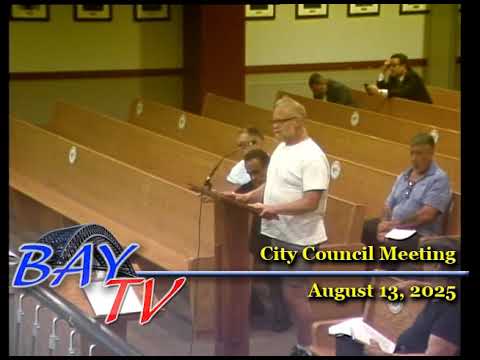
Resident Keith Gallant, 25 East 23rd Street, told the council the new building’s wall would sit immediately on the property line next to his backyard while other properties received a 5-foot buffer. “Why does a developer get to build a 6‑story wall right on the property line when all the properties along Greg Lane have a 5‑foot buffer?” Gallant asked, saying he had not received a satisfactory explanation at the planning board meeting and wanted to know his recourse.
Daniel Banker of NW Financial Group walked the council through the city’s analysis. Banker summarized the proposal as a six‑story project on the former Saint Michael’s Church site with 114 residential units (about 100 studios and one‑bedroom units), roughly 2,700 square feet of retail and 119 parking spaces. He said the estimated project cost is about $43.5 million, and the developer offered a $228,000 community benefit payment (about $2,000 per unit). The pilot the council approved phases a percentage of gross revenue over 25 years (10% for the first 10 years, 11% for the next 10, 12% for the final five), and Banker estimated the city’s share at stabilization would be about $373,000 annually and roughly $12.8 million over 25 years.
City planning staff and the project attorney told Gallant the front of the building was stepped back on upper floors and that the project complies with the redevelopment plan and applicable zoning; they also said the type of relief described would not have required a variance. Planning staff explained that area‑needs studies and redevelopment notices are published in newspapers and that property owners in studied areas typically receive targeted mailings (200‑foot lists) for some phases of redevelopment but that redevelopment ordinance notices are published as required by law.
Several council members pressed for and obtained assurances about tenant parking enforcement and tenant notification. One council member said the city will seek stronger lease‑level and in‑building notice that tenants are not eligible for street‑parking permits and recommended adding conspicuous, building‑level posting requirements to leases and management communications.
Debate on the council reflected a split over pilot policy: some members emphasized the long‑term fiscal benefits the pilot can bring to the city’s budget, while others argued for limits on pilots and better early notice to neighbors. Councilmember Carroll said he would vote against the pilot, citing concerns about pilots versus regular taxation; other councilmembers voted yes. The ordinance passed by recorded vote.
The council closed the hearing and adopted the financial agreement and ordinance by majority vote. City officials said permitting and off‑site parking arrangements required by the redevelopment plan must be demonstrated before certificates of occupancy are issued.