Get Full Government Meeting Transcripts, Videos, & Alerts Forever!
Get email alerts on the Zoning Parking topic
No spam. Unsubscribe anytime.
Petoskey debates raising parking minimums for small downtown restaurants
Summary
At first reading, Petoskey council considered amending parking rules for eating and drinking establishments to require two spaces per five seats plus one space per employee on the largest shift; the Planning Commission recommended the change, but council split over whether raising minimums conflicts with walkability goals.
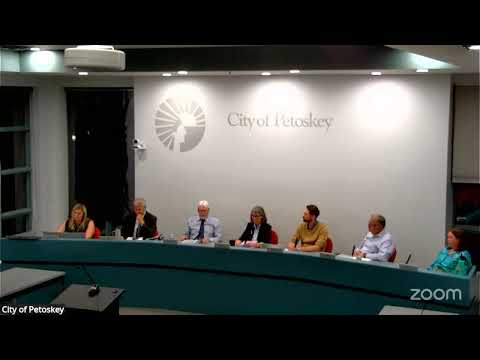
City staff presented on Sept. 15 a proposed zoning amendment to change how required parking for restaurants is calculated, recommending '2 spaces per 5 seats plus 1 space per employee on the largest shift' to prevent staff parking from spilling into nearby residential streets and to enable redevelopment of constrained Brownfield sites.
The Planning Commission recommended the proposal (option 3) to address a specific redevelopment example where a potential restaurant developer needed additional on‑site parking. Proponents on council said the change is a practical, narrow, stop‑gap measure to enable redevelopment of a difficult site and to reduce on‑street parking pressure. Opponents — led by Councilmember Shields — argued that increasing parking minimums moves the city away from walkability goals and could disadvantage small, local businesses and walkable development patterns.
Council did not adopt the ordinance at first reading; the item will return for further consideration with additional analysis of broader parking policy and impacts on walkability. Staff flagged that the amendment was intended as a targeted fix (not a citywide permanent shift) and that a comprehensive zoning update is forthcoming.
Quotes from the meeting highlighted both sides: a supporter said the approach balances customer and employee needs; a critic said raising minimums runs 'opposite of what a lot of cities around the country are doing' to foster walkability.
Next steps: Staff will provide additional information for second reading, including comparisons to best practices, how exemptions apply, and whether the proposed standard should be limited to the Central Business District or apply more widely.