Get Full Government Meeting Transcripts, Videos, & Alerts Forever!
Get email alerts on the Public Health Program Funding topic
No spam. Unsubscribe anytime.
City‑funded prevention program serving thousands faces end after SNAP‑Ed cut, UTHealth warns
Summary
UTHealth presenter told the Brownsville City Commission that a city‑contracted community health program serving roughly 3,440 people faces an abrupt funding loss after federal SNAP‑Ed support was eliminated and that the program’s current funding ends Sept. 30, 2025.
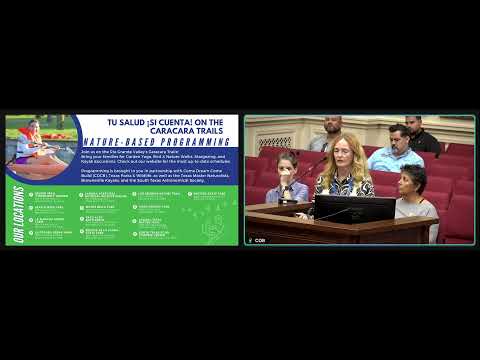
Dr. Lisa Mitchell Bennett of the University of Texas Houston told the Brownsville City Commission on Sept. 2 that a city‑contracted, evidence‑based community health program is at risk after the program’s primary federal funding stream was cut.
The program, delivered in partnership with the city and other Rio Grande Valley municipalities, funds a community health worker and offers exercise, nutrition, diabetes‑prevention classes and other services. "We served, this program served over 3,440 participants throughout Cameron and Hidalgo Counties just this year," Bennett said, describing 2024 evaluation findings showing improved outcomes among participants.
Bennett presented program statistics from the 2024 evaluation: about 60% of participants increased their minutes of physical activity; 69% of participants who entered with high blood pressure saw reductions; and 20% moved from hypertension to normal. She also said 820 participants in a yearlong challenge lost a combined 2,270 pounds (an average 6.8 pounds per completer).
Bennett framed longer‑term trends from the school of public health's cohort work as evidence the interventions reduce chronic disease locally. "We have seen reduction in rates of diabetes and obesity over the last 10 years, 11.5 percent," she said, and presented an economic estimate attributed to her analysis: roughly $240,000,000 per year in health‑care and productivity costs tied to the conditions, and an estimated $65,000,000 saved annually associated with declines in obesity (speaker‑provided figures).
Bennett warned the commission that SNAP‑Ed funding — described as the program's primary federal funder — was "zeroed out" in the recent federal budget and that the contract's funding is scheduled to end on Sept. 30. "So the funding for the program is, as of now, ending on September 30," she said.
City staff and UTHealth officials said the program also relies on other partners and local funding sources but that the federal cut leaves a shortfall. Bennett urged continued local commitment and highlighted the community health worker who connects residents to services, praising Solema Medrano for leading outreach.
The presentation did not include a formal city response, a vote, or a staff directive recorded in the meeting minutes. Next procedural steps — whether the commission will consider emergency funding, reallocate local funds, or seek replacement grants — were not specified during the session.