Get Full Government Meeting Transcripts, Videos, & Alerts Forever!
Get email alerts on the Mining Quarrying topic
No spam. Unsubscribe anytime.
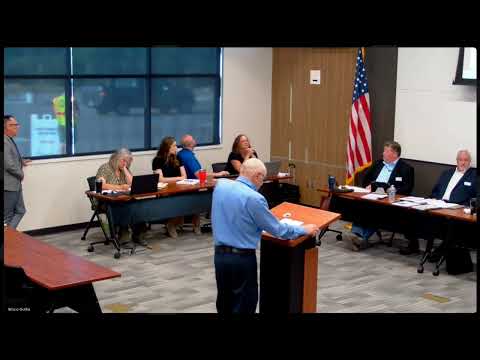
Lawrence County approves Larson/Kroll gravel pit permit after hours of public comment; vote 4-1
Summary
The Lawrence County Commission approved Conditional Use Permit 498 for a Larson family quarry operated by Kroll Inc., voting 4-1 after extensive public comment focused on truck routing, dust and a pending South Dakota Supreme Court case; commissioners required further work on a haul-route/road agreement.
The Lawrence County Commission voted 4-1 to approve Conditional Use Permit (CUP) 498, allowing a small-scale sand, gravel and rock extraction operation proposed by the Larson family with operator Kroll Inc. at a site off Homestake Road.
The permit authorizes use on a 101.63-acre parcel with up to 10 acres active at a time, according to the staff presentation. The applicant, represented by Brian Martin of ProLogistix and Jeremy Anderson, offered to improve and widen nearby roads in exchange for routing changes for local deliveries.
The decision came after more than two hours of public testimony. Opponents urged the commission to delay action until a pending South Dakota Supreme Court case that could alter how conditional-use approvals are processed is resolved. "I think this should be put on hold until the court case that is going through the courts...," said Neil Bowman during remote testimony. Neighbors also raised concerns about increased truck traffic on narrow roads and bridges, dust and crystalline silica exposure, and weak enforcement mechanisms for CUP conditions.
Supporters — including members of the Larson family and several local farmers — argued the quarry would supply local aggregate for roads and construction, reduce long-haul trucking, and provide local economic benefits. "My family has ranch in Lawrence County for six generations," said Stan Larson Dirks in support of the application, adding the site’s small canyon setting would diminish dust and noise.
State mineral regulators and the applicant described mitigation and oversight. Brett Graves, manager for construction aggregate mining at the South Dakota Department of Agriculture and Natural Resources, said the state issues a statewide construction-aggregate mine license and can regulate dust coming from crushers and conveyors, but that fugitive dust from onsite operations generally falls to local authorities to address. The applicant testified they use on-site water trucks, callouts to supervisors and temporary shutdowns to abate dust when complaints arise.
Commissioners discussed adding or editing conditions, including requiring the haul route be approved by the county highway superintendent and by the board of adjustment before operations start. One commissioner said he was "pro mining" but uncomfortable voting while the Supreme Court case remains unresolved; the majority nevertheless approved the permit, directing staff to incorporate agreed language into the written findings and to continue work on a road/haul-route agreement prior to operations.
The permit approval was announced during a roll-call vote; the board instructed staff to update the written findings and the conditions to reflect the agreed edits and to bring the finalized road agreement back for separate consideration.
Next steps: staff will update the written findings and conditions, and the commission will continue negotiations on the haul-route/road agreement that must be completed before the quarry can begin operations.