Get Full Government Meeting Transcripts, Videos, & Alerts Forever!
Get email alerts on the Meeting Summary topic
No spam. Unsubscribe anytime.
Cleveland City Schools board approves consent agenda, advances state-mandated background‑check policy; transportation and foundation updates presented
Summary
At an evening meeting, the Cleveland City Schools Board unanimously approved the consent agenda and passed a first reading of policy 5.118 (state-required background‑check/RAP‑back enrollment). Superintendent Dr. Elliott and staff reviewed school spotlights, transportation gains (37 drivers), and a BCPEF midyear report citing $11.5 million raised.
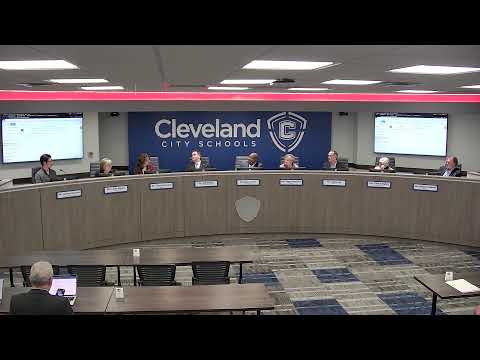
The Cleveland City Schools Board of Education met and, in a session that began at 5:30 p.m., approved the consent agenda and passed a first reading of a state-required background‑check policy.
Board chair opened the session, asked for public comment (none were offered), and then called for a motion to adopt the consent agenda; the motion passed on a roll‑call vote with all named members recorded as "Yes." Later the board took a vote on policy 5.118, described by the policy presenter as a state requirement relating to records of arrest and prosecution and a RAP‑back notification program; the board moved, seconded, and recorded a voice/roll‑call vote that carried the motion.
Why it matters: policy 5.118 will enroll employees in an ongoing background‑check notification system that school HR staff say reduces the need for repeated checks and provides continuous updates when arrests or prosecutions occur. The vote represents a compliance step with state guidance and a formal adjustment to district employee screening processes.
Key reports and updates: Superintendent Dr. Elliott reviewed recent district activity, noting a special call meeting on Jan. 17 to consider a letter opposing the Education Scholarship Freedom Act (voucher legislation) and a series of school events and recognitions. The director highlighted school spotlights at Blythe/Blott Bauer Elementary and recognized student and staff achievements.
The board also heard a midyear briefing from the local education foundation (BCPEF). Laurie McNulty, vice president of the foundation, reported that the organization has raised $11,500,000 in private funds over its 21 years and is channeling those dollars into teacher grants, fellowship programs, telemedicine, scholarships and targeted classroom supports.
Transportation briefing and next steps: Transportation director Mr. Taylor told board members the district now has 37 bus drivers and five bus monitors, up from roughly 20 routes and far fewer drivers last year. He reported approximately 3,266 students assigned to transportation plans, roughly 2,300 students who ride daily on average, and 33 active routes. Mr. Taylor said the district’s buses are equipped with GPS, interior cameras and dash cams, and that TRANZACT and PowerSchool are used for routing and rosters.
Safety initiative: Mr. Taylor described a pilot 'bus patrol' camera program that would identify motorists who run stop signs at bus stops; the pilot is offered by a vendor at no initial cost and would require coordination with local law enforcement if the board elects to pursue citations.
What remains unresolved: Board members discussed recent state action on the Education Scholarship Freedom Act (voucher program) and concerns about cell‑phone legislation, but no new district policy changes on those items were adopted at this meeting. Committee assignments for 2025–26 were announced by the chair and recorded in the meeting without a separate roll‑call vote on the record.
Next steps: Policy 5.118 was advanced (first reading/vote recorded); staff said any further contract amendments (for janitorial services or vendor agreements such as bus‑patrol) would return to the board for approval. The meeting adjourned at 7:00 p.m.