Get Full Government Meeting Transcripts, Videos, & Alerts Forever!
Get email alerts on the Menstrual Product Pilot topic
No spam. Unsubscribe anytime.
State Board authorizes menstrual-product pilot but limits placement to female restrooms and health offices after heated debate
Summary
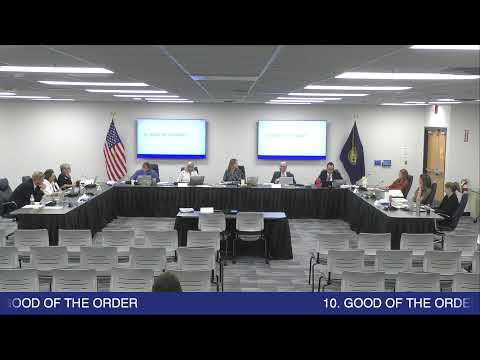
The Nebraska State Board of Education voted 5–3 on June 6 to authorize a pilot to provide menstrual products in schools, adopting an amendment that limits placement to female restrooms, locker rooms and health/nurse offices after extended debate over definitions and local control.
The Nebraska State Board of Education on June 6 approved a pilot program to supply menstrual products in schools, but only after members adopted an amendment restricting where those supplies may be placed.
The board voted 5–3 to authorize the commissioner to contract for the menstrual-product pilot program as amended to require that "menstrual products will be placed only in female restrooms and locker rooms and health and nurse offices." The final roll call showed votes in favor from Kristen Christensen, Deborah Neri, Elizabeth Tegmeier, Mary (Renner), and Maggie Douglas; Sherry Jones, Lisa Schonhoff and Kirk Penner voted no.
Supporters said the program addresses a practical barrier that can keep students from attending class; board member Maggie Douglas and others emphasized reducing obstacles to learning. "When kids feel safe," one board member said during debate, "these are the little things that make the learning environment better."
Opponents raised procedural and jurisdictional concerns about the board defining restroom access and worried about local-control implications. Board member Kirk Penner moved a broader amendment to define "female" and to restrict placement only to female restrooms and locker rooms; that motion failed on a 4–4 vote. Penner argued the narrower placement language was needed to protect students' privacy and safety. After that vote, a compromise amendment adding health/nurse offices passed and was folded into the main motion, which the board then approved.
Commission staff and legal counsel told the board restricting action to this meeting could be necessary to meet funding timelines for the pilot year; Deputy Commissioner/board counsel Brian Halstead told the board the program funding year runs from 07/01/2025 through 06/30/2026. Several members said they preferred committee review and more time but accepted the amendment to proceed quickly so districts could access the funds.
The authorization directs the commissioner to establish a pilot program. The motion as adopted did not specify grant sizes, participating districts, or an implementation schedule; board members said the department would finalize those administrative details with districts and report back.
Next steps: The commissioner is authorized to contract for the pilot; staff will provide implementation details and timing to the board and affected districts.
Provenance: Topic introduced at SEG 2444, debate continued through SEG 3265; amendment text and final roll call appear at SEG 2926–3265.
Speakers quoted or referenced in this article are those who appear in the meeting transcript.