Get Full Government Meeting Transcripts, Videos, & Alerts Forever!
Get email alerts on the Family Life Education topic
No spam. Unsubscribe anytime.
Clarke County staff outline proposed Family Life Education curriculum and opt-out plan
Summary
School staff presented a Family Life Education (FLE) curriculum draft, sample lessons for elementary and high school, and a proposed opt-out process; staff recommended removing material already covered in approved health or SEL lessons so opting out won’t cause students to miss required instruction.
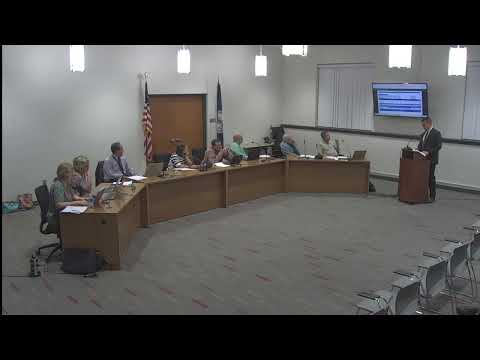
Jessica Nail, director of curriculum instruction, and members of the division’s FLE committee presented a draft Family Life Education curriculum to the Clarke County School Board on Sept. 22, saying the work is grounded in state law and the Virginia Department of Education standards.
Nail said the curriculum is intended to “equip and empower students with knowledge and life skills to foster positive individual and family development and strengthen interpersonal relationships.” She walked the board through statutory topics the committee used as a foundation, including family living, abstinence, human reproduction, prevention of trafficking, characteristics of abusive relationships and the meaning of consent, noting those items are drawn from the Code of Virginia and VDOE guidance.
Alicia Solich, the school counselor at Boyce Elementary, described an elementary lesson on appropriate touch and self-advocacy. “Students will recognize the elements of good and bad touches,” Solich said, and will learn to “identify parts of their body that should not be touched” and how to name trusted adults to report concerns. Solich said a parent handout would be sent home the day the lesson is taught so caregivers can reinforce the material.
At the high-school level, Matt Ernst, a health and physical-education teacher at Clarke County High School, described a two-week module on healthy relationships that covers boundaries, consent and digital communication. “We want to make sure these kids are having good boundaries with…private texts or Snapchats,” Ernst said, and students would practice communication and role-play conflict-resolution scenarios.
Presenters summarized community feedback from a brief online survey: 12 total responses (10 submitted before the survey closed, two received afterward). About 60% of respondents identified as community members and roughly 20% as special-education staff. Of the 12 responses, four respondents said they were fully in favor of teaching the curriculum; the presenters reported no responses that were wholly opposed to teaching FLE. Common themes included requests for clearer language around body-part terminology (some respondents asked for biological names at certain levels), coverage of sexting and cyberbullying, and occasional requests to teach some lessons separately by gender.
Nail said the committee proposes to remove from the FLE draft any items already covered by approved health classes, counseling or social-emotional learning (SEL) lessons so that a parent who opts a child out of FLE will not cause the student to miss state-required instruction. “We feel like those are already included in our social emotional learning lessons that have been approved and we’re already doing those,” Nail said.
On the opt-out process, Nail said that once the curriculum is approved, parents will have the opportunity to opt their children out of the full FLE curriculum or of specified objectives; students who are opted out would receive alternate, non-punitive instruction (for example, an SEL or career/PE lesson) in another location. Staff emphasized they prefer advance notice so teachers can arrange supervision and alternate assignments, though the system would accept opt-out requests during the school year.
Board members asked about parental presence during lessons and oversight. Nail said classroom supervision would follow regular instructional procedures and administrators would conduct walkthroughs if concerns arise. The presentation concluded and the board moved on to the next agenda item without taking a board vote on the curriculum at that time.
Next steps: the presentation ended with the board accepting the report; staff indicated they will incorporate feedback, refine grade-level materials and return with an approval item at a future meeting.