Get Full Government Meeting Transcripts, Videos, & Alerts Forever!
Get email alerts on the Elementary Budget topic
No spam. Unsubscribe anytime.
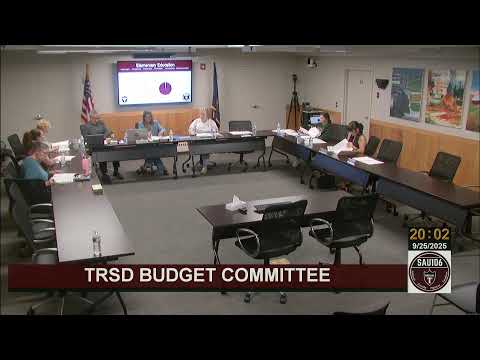
Timberlane elementary principals outline FY27 needs as committee accepts budgets for review
Summary
Elementary-school leaders told the Timberlane Regional School District budget committee that supplies, library restorations, online math programs and furniture replacement drive FY27 costs; the committee voted unanimously to accept the elementary budgets for review pending further documentation and grant outcomes.
Steve Harris, principal at Atkinson Academy, and Mary Sullivan, principal at Pollard, presented the Timberlane Regional School District’s elementary-school operating and replacement requests on Sept. 25 and described the primary cost drivers the budget committee should expect to see in the elementary packet.
Harris told the committee the elementary group expects about 1,600 students in 2026–27 across five schools and “about 365 staff members,” noting that the slides show the FY25 actuals, FY26 voted figures and the FY27 requests. Sullivan said the district’s biggest elementary operating driver is basic supplies — "pencils and paper and glue and scissors" — and added that restored library budgets and information-access fees (for programs such as ReadyMath) are significant line items.
The presentation highlighted three budget themes: recurring instructional costs, one-time replacement cycles and nascent investments. Presenters said some schools’ per-pupil access fees are higher because teachers chose online resources for particular grade levels; others rely on workbook or print versions, which lowers their access-fee line. Harris and Sullivan emphasized that furniture replacement cycles are uneven across schools — some classrooms have desks more than a decade old — and that Atkinson’s higher per-pupil figures are partly explained by recent or pending classroom refreshes.
Committee members pressed for clarity on line items. One member noted that Atkinson’s proposed replacement-furniture total looked large compared with other schools; presenters explained there are separate lines: a modest principal-office replacement-equipment line (walkie-talkies) and a larger furniture replacement line on the following page. The superintendent added the district has applied for a safety grant to reimburse walkie-talkie purchases, but "it has not been approved," so those lines remain in school budgets pending reimbursement.
On technology, presenters said they have piloted interactive displays and would coordinate purchases with the district technology director so major purchases would ultimately come from the central technology budget. The group also discussed that districtwide licenses for commonly used programs now reside in the technology budget while school budgets keep funds for teacher-selected materials.
After questions and clarifications, an unnamed committee member moved to accept the elementary-school budgets for FY27 "for review." The motion passed unanimously.
Next steps: administrators will circulate supporting materials (including the large FY25–FY27 table referenced in the packet), staff will push a sign-up grid for virtual school walkthroughs tied to PTSA events and the committee will review the submitted materials and any grant outcomes before final recommendations.