Get Full Government Meeting Transcripts, Videos, & Alerts Forever!
Get email alerts on the Esip Solar Financing topic
No spam. Unsubscribe anytime.
Metuchen board hears ESIP plan to fund solar, roof and HVAC work through energy savings
Summary
DCO Energy and Spiezel Architects presented an ESIP financing proposal to the Metuchen Board of Education that would pay for solar, roof restoration and HVAC upgrades from guaranteed energy savings. The board pressed presenters on guarantees, insurance, vendor risk and timing tied to a Dec. 31, 2027 tax-credit deadline.
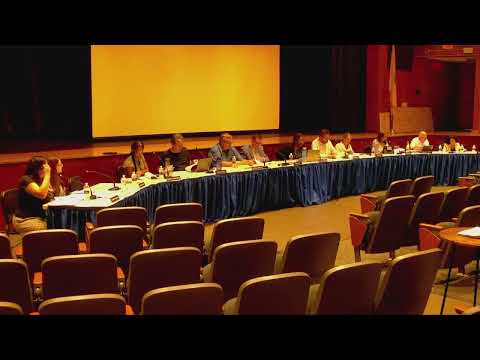
DCO Energy and Spiezel Architects presented an energy savings improvement plan (ESIP) to the Metuchen Board of Education on July 22, proposing to finance solar installations, roof restorations and HVAC upgrades without a direct tax increase by using projected energy savings to cover bond payments.
The plan would start with an investment-grade audit — a field-level review of all district buildings — before the board decides which measures to include. Steve Siegel of Spiezel Architectural Group said the audit typically takes about four months and will let the district select the combination of measures it prefers. Greg Burns, senior business development manager at DCO Energy, told the board ESIP financing can be structured over 15–20 years and “is a budget neutral financing mechanism” that does not require a voter referendum.
Why it matters: District staff and board members said they want to ensure that projected savings are reliable before issuing bonds that would be paid from those savings. Burns and Siegel presented three scenarios that trade off rooftop HVAC replacements against broader roof restorations; example modeling showed net cash-positive results in the range of roughly $4,300 per year (more conservative scope) to about $15,000 per year (more aggressive scope), depending on the scope chosen. In solar-only modeling, DCO showed a conservative case limited to the high school with estimated district savings of about $110,000 per year and a best-case model (if all four school sites could interconnect) exceeding $250,000 per year.
Board members asked detailed questions about financial assumptions and risks. Board member Mister Suss pressed on the core risk: because the ESIP bonds would be secured by projected savings, shortfalls would have to be covered from operating funds. Burns said ESIP projects must be modeled under Board of Public Utilities (BPU) protocols and that the program requires escalation assumptions and an independent third‑party engineering review; DCO also offers savings guarantees on projects and cited its track record of meeting guarantees in prior work.
The board also discussed solar-specific issues. Miss Killeen asked whether leasing panels under a power purchase agreement (PPA) would leave the district dependent on a private provider for maintenance and repairs; presenters said public PPAs are limited by law to 15 years, that PPA providers typically maintain systems and that PPA contracts include performance guarantees (DCO described a common minimum output guarantee near 90% of expected kilowatt-hours and contractual remedies if production is lower). Burns and Siegel said contracts can require the provider to repair or replace damaged equipment and to restore roofs if panels are removed. The presenters noted that public entities do not receive the federal tax credits themselves; those credits are part of the financial case for private PPA providers.
Timing and federal credits: Several board members raised the federal investment tax credit (ITC) timing and utility interconnection queue as a practical constraint. Burns said solar systems must be energized by Dec. 31, 2027 for providers to claim the current federal credit in many of their models; he warned that waiting increases queue risk with PSE&G and could raise PPA pricing or limit the number of sites the utility will allow to interconnect.
Other concerns addressed included insurance and damage from wind events, vendor bankruptcy or sale, and the cost of issuance (bond counsel, financial advisor and rating costs). DCO said competitive RFPs include financial‑background reviews, vendor-approval clauses and bid scoring to avoid “fly‑by‑night” vendors; the company also cited examples where a change of ownership led to negotiated transitions rather than project failure.
Next steps: Presenters recommended the board consider authorizing an investment-grade audit so the district can receive firm subcontractor pricing and finalized modeled savings. No formal action was taken July 22; the board will receive audit deliverables and a modeled financing package before any authorization to proceed with construction or bond issuance.
Quote highlights: Greg Burns said, “ESIP is a budget neutral financing mechanism to achieve capital improvements and reduce your energy consumption.” Steve Siegel said the audit would be “boots on the ground” work that produces firm numbers the board can then model.
What happens next: If the board approves the investment-grade audit and decides on a scope, the district would proceed to financing design and a competitive bidding process before implementation. Presenters described multiple progress workshops during the audit to allow the board and administration to adjust priorities and conservatism in the financial model.
No vote was taken on July 22; the presentation was informational and intended to guide the board’s decision about whether to fund an investment-grade audit.