Get Full Government Meeting Transcripts, Videos, & Alerts Forever!
Get email alerts on the Budget Governance topic
No spam. Unsubscribe anytime.
Senate approves bill requiring governor to present spending-reduction plans to Joint Budget Committee
Summary
Senate Bill 25B-001, passed on second reading Aug. 21, 2025, requires the governor to notify the Joint Budget Committee and present a formal spending-reduction plan when executive action reduces spending due to fiscal shortfalls, with specific triggers for mandatory action.
The Senate on Aug. 21 adopted Senate Bill 25B-001, a measure that relocates and clarifies statutory authority for the governor to reduce spending when the state cannot meet its fiscal obligations, and requires the governor to present a spending-reduction plan to the Joint Budget Committee (JBC) and receive advice.
Sponsor Senator Coleman said the bill "requires the governor to promptly notify the joint budget committee when an executive order for spending reductions is issued" and adds a measurable trigger tied to quarterly revenue estimates: action is required if updated revenue estimates show the need to use either 2% of general fund appropriations, half of the required reserve, or if the reserve drops below $1,000,000,000.
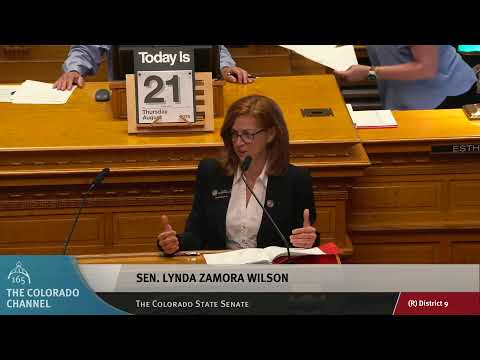
Supporters framed the bill as balancing emergency executive authority with fiscal oversight and transparency; some members urged stronger legislative constraints. Senator Zamora Wilson and others raised questions about reserve targets and large-dollar differences that underlie percentage-point descriptions. Senator Pelton b urged further restriction on executive discretion. After brief floor discussion the bill was adopted on second reading and ordered to third reading and final passage.
Next steps: SB25B-001 will be considered on third reading; floor debate emphasized triggers, oversight and the balance of executive tools and legislative control.