Get Full Government Meeting Transcripts, Videos, & Alerts Forever!
Get email alerts on the Student Programs Policies topic
No spam. Unsubscribe anytime.
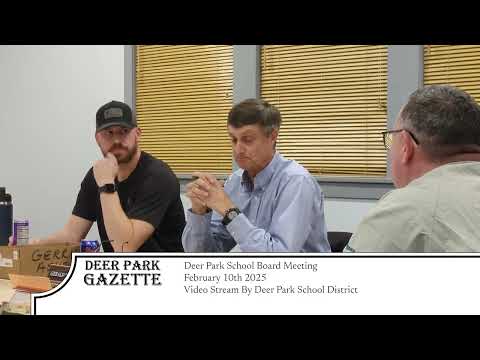
Deer Park ISD discusses reallocating summer-school funds, nondiscrimination policy edits and student scheduling implications
Summary
The board agreed to reallocate federal/state summer-school money into school-year interventions after low attendance and compliance concerns; members also reviewed nondiscrimination policy wording and high-school scheduling and funding implications for students in off-campus programs.
The Deer Park ISD board discussed a set of program and policy updates affecting students and families, including a decision to reallocate summer-school dollars into interventions during the regular school year, and consideration of edits to the district’s nondiscrimination policy.
Speaker 4 explained that summer school historically was funded with federal and state dollars but has strings attached: attendance, monitoring and progress tracking in ELA and math. "When we took a look at the attendance rate, it was under 50% at 55 level," Speaker 4 said, and the district determined it was not meeting the students who were intended to be served. Staff recommended reassigning those LAP and Title allocations into additional in-school interventions during the academic year. Speaker 4 cited practical hurdles to summer programming, including the requirement to have an administrator and a nurse on-site and low teacher interest in summer assignments.
On policy, Speaker 4 updated the board about proposed edits to Policy 32.10 (students and nondiscrimination), saying the redline from legal counsel shows that examples in the policy are illustrative and not exhaustive; the board discussed whether to remove specific bullets (one referenced bathrooms/gendered facilities) to reduce community pushback while ensuring the district can justify the choice if asked. Speaker 3 asked whether an organizational name change (Boy Scouts of America to Scouting America) had been captured correctly.
Speaker 4 also reviewed high-school scheduling and FTE funding: students attend six periods but may pursue off-campus options (skill center, running start, work-based learning) that yield partial FTE allocations and reduced per-student funding. "Per student per FTE...that's the student allocation we get from the state," Speaker 4 said, noting approximate funding implications.
The board requested staff provide detailed student-count evidence and clarified the need for public responses if examples are removed from policy language. No formal policy adoption occurred at this meeting; staff were asked to return with revised language and additional data.