Get Full Government Meeting Transcripts, Videos, & Alerts Forever!
Get email alerts on the Civil Rights topic
No spam. Unsubscribe anytime.
Muskegon City Commission adopts resolution opposing racial profiling
Summary
The commission unanimously adopted a resolution reaffirming commitment to the U.S. Constitution and expressing moral opposition to racial profiling in law enforcement and immigration enforcement. Commissioners spoke of personal and community experiences and urged continued vigilance.
The Muskegon City Commission adopted a resolution reaffirming the city’s commitment to the ideals of the U.S. Constitution and expressing moral opposition to racial profiling by law enforcement and immigration agents.
Commissioner Kilgo introduced the measure as a Constitution Week resolution citing the Fourth Amendment and a June 2023 U.S. Department of Justice fact sheet that frames racial profiling as an unlawful and erroneous assumption about individuals based on race or ethnicity. "The city of Muskegon hereby reaffirms its commitment to the ideals of liberty and justice for all and reaffirms its moral opposition to racial profiling in law and immigration enforcement," the resolution states as read to the commission.
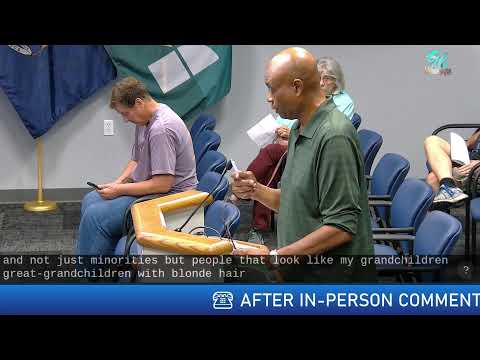
Several commissioners voiced support during discussion. Commissioner German said, “As being a victim of racial profiling myself, I've seen it, and I know what it looks like,” and urged the city to take active steps to oppose discriminatory policing practices. Other commissioners expressed gratitude to the sponsor and emphasized the importance of standing up for marginalized community members.
The commission adopted the resolution by roll‑call vote with those present voting in favor.
What’s next: The resolution is a policy statement reaffirming values and does not by itself change statutes or departmental policy; it signals the commission’s stance and can guide future oversight or policy reviews.