Get Full Government Meeting Transcripts, Videos, & Alerts Forever!
Get email alerts on the Acceptable Use Policy topic
No spam. Unsubscribe anytime.
Easley council debates acceptable-use policy for elected officials amid privacy and free-speech concerns; votes to consult attorney in executive session
Summary
Council members raised privacy and First Amendment concerns about a proposed acceptable-use policy for elected officials, especially provisions allowing review of communications and restrictions on referencing the city on personal social media. The council voted to enter executive session to receive legal advice on the policy and on term limits.
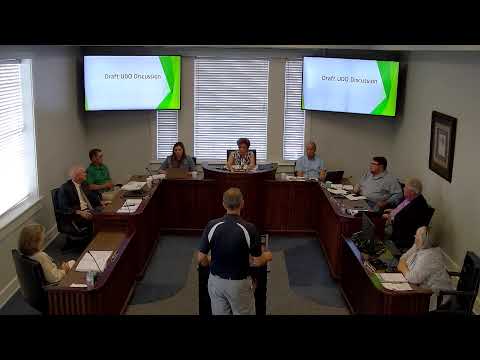
The Easley City Council spent the bulk of its July 14 work session debating Resolution 2025-12, a proposed acceptable-use policy addressing elected officials’ use of city information systems and the interaction between official and private communications.
A council member raised constituent privacy concerns, saying residents had contacted her fearful of retaliation and noting the draft policy states city communications and voicemails could be reviewed at any time. Staff and the city attorney responded that city emails and certain records are subject to FOIA retention requirements and that exemptions can allow redaction of contact information. "We are required to keep those emails per FOIA law," a staff speaker said, adding a five-year retention period.
Council members also objected to language they said could restrict elected officials’ private speech. Points of dispute included requirements that elected officials avoid posting references to the City of Easley on private social-media accounts unless the content is "official," a prohibition on posting photos of other elected officials or citizens without written consent, and a clause saying elected officials must state they are not speaking on behalf of the city (a compelled-speech concern for some members). One council member said the draft "goes far, far beyond" protecting city property and introduced the risk of compelled speech; another said the text provides useful guardrails to separate private and official channels.
The city attorney said he had a legal opinion on the policy and preferred to provide it in executive session. After debate, a council member moved and a second was recorded to add an executive session to the agenda to receive legal advice regarding Resolution 2025-12 and term limits. The transcript records the motion, a second and a verbal "All in favor? Okay," indicating the council approved adding the executive session; no public roll-call vote or final decision on the policy appears in the work session transcript.
Next steps: the city attorney offered to brief council in executive session and staff said it was open to refining the policy language based on legal advice and council input before a formal vote.