Get Full Government Meeting Transcripts, Videos, & Alerts Forever!
Get email alerts on the Education Policy topic
No spam. Unsubscribe anytime.
Board debates AI permissions, evaluation reporting and student-health provisions while adopting policy package
Summary
Board members debated proposed policy language on artificial intelligence permissions, educator-evaluation reporting, and student-health access before approving a packaged set of policy updates; members requested clearer links to external reporting channels and executive-session procedures for personnel matters.
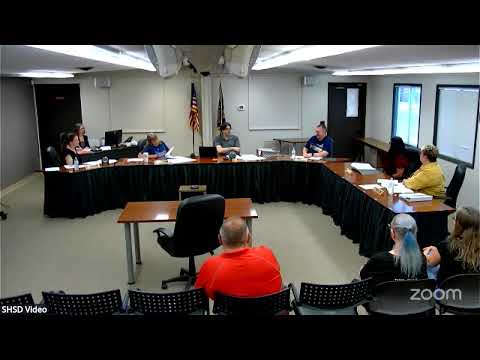
Board members spent significant time on policy updates at the June 25 meeting, discussing artificial intelligence use in classrooms, educator-evaluation reporting, student-health provisions for feminine hygiene, and procedural protections for harassment reports and background checks.
On artificial intelligence policy, one board member asked whether parent permission should be required for AI-related classroom uses and whether staff should require students to identify AI sources in assignments. The board discussed options for targeted parental permission by age group and noted that some permissions (for movies, photos and other items) already appear in district practice and registrations.
Discussion about educator evaluations focused on how the superintendent should report implementation and outcomes to the board. One member asked for regular reporting that identifies whether administrators or educators had been rated "effective," "not effective," or were "on a plan;" staff and other members agreed to provide system-level data while reserving personnel-level details for executive session when appropriate. As a presenter summarized, the policy language calls for the superintendent to "regularly report to the board about the implementation of evaluation and support systems of the educator effectiveness." Board members asked for clearer definition of the content and cadence of those reports.
Members also discussed student-health services and privacy: a staff member said feminine-hygiene products "will have feminine hygiene in every bathroom," and board members asked that in gender-neutral restrooms the products be placed in a more private location (for example, the office or a designated classroom) so students can access them confidentially.
Several board members raised concerns that a harassment-reporting policy referenced only a local HR contact ("Pete") and omitted explicit cross-reporting to outside agencies such as the Department of Human Services or the Teacher Standards and Practices Commission; staff acknowledged the need to clarify required cross-reporting and statutory limits and agreed to return with clarified language. Members also asked whether the district or individuals pay for fingerprinting and criminal-record checks, whether board members should be listed in volunteer-payment language, and requested that trespass protocols remain confidential and include explicit staff guidance to avoid publicly posting private information.
After debate the board moved to approve the set of policies that had been moved from the consent agenda into action items. A motion to approve the listed policies as a package was seconded and adopted by voice vote. Board members encouraged continued policy training for administrators and recommended a more formal policy-review process for the incoming board.
The board directed staff to refine policy language on cross-reporting, clarify the reporting format and cadence for evaluation data, and address placement and privacy of student-health supplies. The board then approved the policy package and proceeded with other action items.