Get Full Government Meeting Transcripts, Videos, & Alerts Forever!
Get email alerts on the School Construction topic
No spam. Unsubscribe anytime.
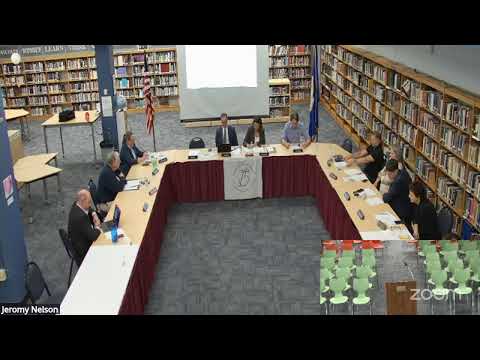
Region 15 feasibility committee recommends new single campus; board authorizes property search
Summary
The Regional School District 15 Feasibility Study Committee recommended building one new campus configured as a "school within a school" to replace Gainesville and Pomprive elementaries; the board gave staff consensus to begin searching for potential sites and to present candidate properties in executive session.
The Regional School District 15 Board of Education spent the bulk of its meeting discussing a Feasibility Study Committee recommendation that the district address extensive repairs and capacity issues at Gainesville Elementary School (GES) and Pomprive Elementary School (PES) by building a new, combined campus described as a "school within a school." The presenter said the committee reviewed 11 meetings, three community conversations and tours of district facilities before reaching a unanimous recommendation to pursue a single new campus on a new property.
The committee argued a single-campus design creates economies of scale—shared kitchens, mechanical spaces and administration—and could improve state reimbursement because shared spaces reduce duplicated square footage. Presenters and board members discussed recent state-level proposals that would add roughly 15% reimbursement for projects that include preschool or dedicated special-education space; staff said those provisions could materially affect the effective reimbursement rate but that final rules and caps remain uncertain.
Board members raised recurring concerns about the social and community impacts of a large school. Several members cautioned that a roughly 1,000-student campus could overwhelm some families and noted scheduling challenges for music, band and physical-education classes if shared spaces are not carefully managed. Presenters acknowledged those trade-offs and cited design solutions such as separate entrances, internal "wings" or a school-within-a-school layout to preserve smaller-grade communities inside one building.
Site availability and financing shaped much of the discussion. The committee recommended starting outreach for a new property in Southbury, noting a typical target of about 15 acres but acknowledging wetlands or sewer availability could change exact needs. The board heard that any sale of existing district property would require a public referendum under the district bylaws; staff estimated an $8,000 administrative cost if a referendum is scheduled on an existing election date. Members asked for site visits to comparable facilities and asked staff to present candidate parcels in executive session for legal and acquisition deliberations.
No binding decision was taken; the board instead gave consensus direction for staff and designated board members to begin contacting potential property owners and to return with options for further, confidential review. Tekton (the district's consultant referenced in the presentation) and district staff will return to the board with more detailed cost models, grant and bond timelines, and site-specific analyses ahead of any decision to place a renovation or construction question before voters.
The board also reviewed project timing: staff said a backward timeline aimed to make a construction grant and bond work compatible with an ideal May 2026 referendum, but members emphasized much work remains—site analysis, grant application timing, reimbursement calculations and community engagement—before any referendum question is drafted.