Get Full Government Meeting Transcripts, Videos, & Alerts Forever!
Get email alerts on the School Facilities topic
No spam. Unsubscribe anytime.
Region 15 feasibility committee recommends building a new combined elementary complex
Summary
After a yearlong study and public engagement, the feasibility‑study committee unanimously recommended constructing a new two‑school complex on a new site as the preferred solution to address aging buildings, enrollment growth and long‑term costs; the board will discuss real‑estate options in executive session.
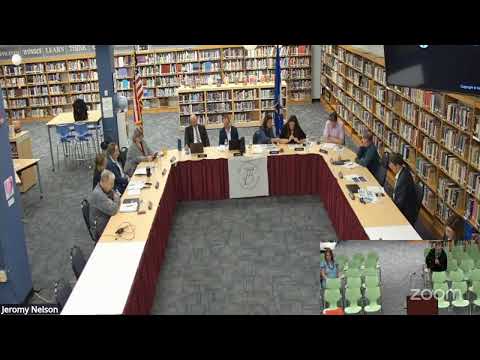
The Region 15 feasibility‑study committee recommended the district build a new two‑school complex on a new site after more than 11 committee meetings, three public community conversations and a series of teacher think tanks.
Tekton Architects principal Jeff Wazinski, who presented the committee’s options to the board, said the study examined existing conditions, programmatic needs and state reimbursement rules. "My name is Jeff Wazinski. I'm a principal at Tekton Architects," he told the board before outlining typical schedules, cost ranges and grant deadlines that shape whether a project is feasible within state priority‑grant cycles.
The committee’s unanimous recommendation favors a combined new‑construction option in which two schools would be planned together on a single campus — a choice members said balances educational benefits and lifecycle cost. Committee member Don Michaels, who spoke about the financial assessment, said the difference in taxpayer cost between renovate‑as‑new and a new combined school was relatively small over time and that a larger, purpose‑built facility offered educational advantages.
Jason Andrews, a parent and feasibility‑committee member, submitted a written statement urging the board to pursue a new campus. His statement, read into the record, said a two‑school complex "could provide optimized learning environments for students in this district without encountering the limitations in the use and development of the existing properties." The statement also flagged property selection as the primary practical obstacle.
Tekton’s presentation included enrollment projections and state reimbursement guidance. Presenters noted that adding a pre‑K program can increase the building’s reimbursable base — the presentation cited a 15% additional reimbursement for schools that include pre‑K — and that state formulas use an eight‑year enrollment window when calculating allowable area. Tekton also gave comparative cost examples for renovate‑as‑new and for new construction, and warned that site topography and required acreage (presenters said a combined site could need roughly 15 usable acres) would limit options within existing school footprints.
Board members pressed staff and Tekton on practical next steps, including how class‑size scenarios would be handled, whether district boundaries would be adjusted, and the timing and feasibility of pursuing a state space‑waiver or special legislation to improve reimbursement. The board chair made clear the board would not vote on a design option at this meeting and said it would move into an executive session to discuss possible real‑estate acquisition with Tekton and district staff.
Next steps: Tekton advised the district to complete early due diligence and be grant‑ready for the June priority‑grant deadline should the board decide to pursue state funding; the board will examine potential properties in executive session before deciding whether to place a plan before voters.