Board runs SOFG training, completes self-evaluation and discusses superintendent evaluation alignment
Summary
Facilitator Dr. Ramos led the board through technical/tactical/strategic questioning, SMART strategic question practice, and a Student-Outcomes-Focused Governance self-evaluation. The board also reviewed a draft superintendent-evaluation instrument tying goal and guardrail outcomes to pay-for-performance and asked staff to return a revised, equally weighted draft for a formal vote.
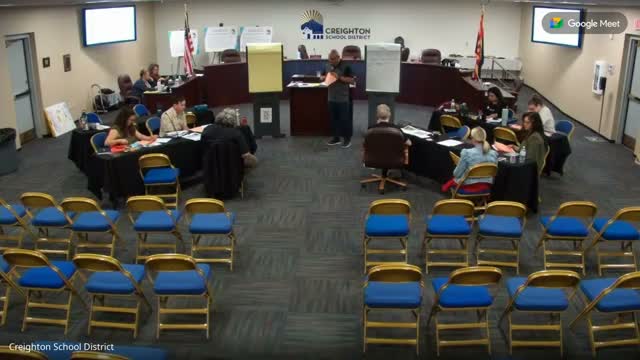
The Creighton Elementary District board used a study session on Aug. 16 to deepen governance practice and to align accountability tools with Student-Outcomes-Focused Governance (SOFG) principles.
Training and practice: Facilitator Dr. Ramos led board members through the distinction among technical (how something is measured), tactical (how something is implemented) and strategic (how performance aligns to priorities) questions. He coached members to convert operational queries into SMART, results-focused strategic questions that can drive a productive monitoring dialogue with the superintendent and staff. Several board members practiced converting sample questions and produced draft SMART strategic questions to use at future monitoring sessions.
Board self-evaluation (SOFG rubric): Using the SOFG rubric, members performed a group self-evaluation that walked the board through 'not student-outcomes-focused' to 'mastering student outcomes focus' criteria. The board discussed tracking time invested on student-outcomes monitoring in board meetings, limiting non-outcome adult-business items during governance time, and making progress-monitoring final reports clearer for public presentation. The board adopted the self-evaluation results by voice vote at the end of the session.
Superintendent evaluation and pay-for-performance discussion: Staff presented a draft instrument that ties goal attainment and guardrail performance to the superintendent’s annual evaluation and pay-for-performance. The board discussed whether goals and guardrails should be equally weighted and whether the payout bands should allow a small amount of 'leeway' (for example, treating a 90–100 range as full). Staff offered to recalculate the instrument so categories are equally weighted and to return an updated draft for board action on the next agenda.
Quotable: "Technical and tactical questions are often essential to having a full understanding of current system performance… timing matters, however," Dr. Ramos said in the training. On the self-evaluation adoption motion, a board member moved to approve the document and the motion passed by voice vote.
Why it matters: The training and self-evaluation are intended to sharpen the board’s ability to ask strategic questions that reveal root causes before directing future actions. Tying outcome-based governance to a superintendent evaluation instrument is part of a broader effort to make governance decisions—and any performance incentives—transparent and predictable.
Next steps: Staff will revise the superintendent-evaluation instrument to reflect equal weighting across goals and guardrails and will return the revised instrument to the board for formal action; staff also committed to adding progress-monitoring summaries and to tracking board meeting time invested in outcome-focused governance.