
Board reviews proposed interim measures tied to math, ELL, attendance and literacy goals
Get AI-powered insights, summaries, and transcripts
Subscribe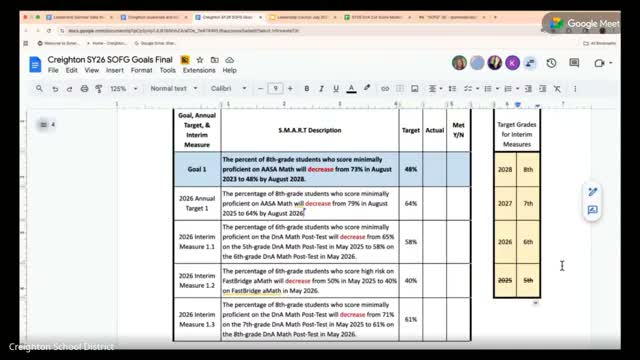
Summary
Superintendent staff outlined four multi-year goals and three interim measures per goal (DNA benchmarks, FastBridge screeners, attendance/SEL measures) intended to monitor progress toward 2028 targets; the board flagged communication needs and requested the interim measures return for a formal vote.
Creighton Elementary District staff presented four multi-year goals and the interim measures they say will help the board track progress more frequently through the school year.
The goals include: reducing the percentage of eighth-grade students scoring minimally proficient in math (Goal 1); increasing Black students’ math proficiency (Goal 2); accelerating growth for emerging multilingual students on language measures (Goal 3); and raising third-grade ELA proficiency toward state-average levels (Goal 4). Presenter (Speaker 1) described cohort-based interim measures tied to Renaissance DNA benchmarks and FastBridge screeners and said each goal is accompanied by three interim measures to provide triangulated evidence.
What staff proposed: For Goal 1, staff recommended tracking cohorts (for example, sixth-graders who were minimally proficient on DNA post and monitoring their progress into eighth grade) and setting an annual target consistent with the district’s five-year aim. For Goals 2–4, interim measures mix DNA post-test proficiency, FastBridge risk-level shifts, and oral-reading-fluency or auto-reading screeners (the latter for upper grades) as leading indicators. Staff noted they will pilot a Renaissance-built language mimic for multilingual learners this fall and will collect baseline data for future cut-score setting.
Board concerns and operational notes: Members repeatedly emphasized two needs: (1) clearer parent- and community-facing materials that explain how different assessments relate (DNA benchmarks, FastBridge, AASA) and why a lower early-year percentage under renormed cut scores does not mean the district lowered standards; and (2) practical guidance for teachers—for example, how to use multiple sets of moving cut scores across the year to set SMART goals with students. Presenter recommended teacher test talks, EduClimber dashboards for live tracking, and regular renorming with Renaissance.
Timing and formal action: Staff said the interim measures will be on the next regular board meeting agenda for formal adoption. No final votes on these interim measures were taken at the study session. Board members asked staff to schedule follow-up two-way communication study sessions that will help board members and principals prepare scripts and visuals for families.
Quotable: "These three interim measures are what we’re proposing to help us monitor if we’re going to meet our annual target of 64%," Presenter said about Goal 1. "This allows us to adjust sooner rather than later," Tyson added when describing how data will populate EduClimber and drive classroom adjustments.
Next step: Staff will return with the final documents for board action at the next meeting and prepare parent-facing materials and internal training for teachers and coaches to implement the new interim measures.