Get Full Government Meeting Transcripts, Videos, & Alerts Forever!
Get email alerts on the K 12 School Finance topic
No spam. Unsubscribe anytime.
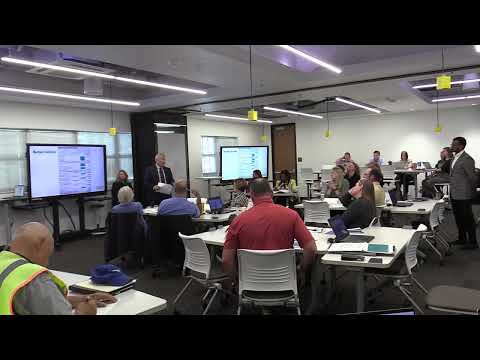
Georgetown ISD trustees model 2025–26 cuts; TRE and attendance gains offer limited fixes
Summary
At an April 7 board workshop, Georgetown ISD trustees reviewed a preliminary 2025–26 budget and modeling under current law, were asked to approve department (5%) and campus (10%) reduction targets, and requested a public information item listing programs considered for cuts. Staff said a TRE or attendance gains could help but have limited near-term effect.
Georgetown ISD trustees spent their April 7 workshop running hands-on budget modeling and narrowing a list of possible reductions as the district plans its 2025–26 budget. Staff presented scenarios under current law and recommended a minimum 5% reduction for district departments and a 10% reduction for campus budgets while asking principals to identify priorities to protect.
The workshop’s goal, staff said, was to give trustees a clearer sense of how small changes in assumptions drive the district’s revenue and spending outcomes. “Attendance drives everything,” a facilitator said, noting that average daily attendance and how pre-K is counted materially change state funding. Staff pointed to the model’s sensitivity: the demographer/model showed a roughly $2,000,000 difference tied to a 2% attendance swing, meaning each percentage point of attendance is roughly worth about $1 million in state funding in the district’s scenarios.
Trustees and staff discussed the tax ratification election (TRE) as a revenue option but concluded it is not a practical solution to balance the budget this year. A staff member explained the TRE is a multistep voter process and would need several procedural steps; trustees were also told that much of the additional revenue can be lost to state recapture, limiting local benefit. “Increasing the tax rate by a few pennies is not as powerful as it may seem because a large share of additional revenue can go back to the state,” a trustee said in the workshop.
Staff outlined specific program and staffing options to reach the district’s reduction targets. Campus-level proposals included changes to assistant principal staffing (adjusted by campus-size staffing formulas), a proposed reduction in health-care professional positions (noted as $275,000 in savings), and adjustments to paraprofessional support at elementary campuses under 650 students. For specialized programming, staff proposed a hybrid model for gifted-and-talented (GT) services that would cluster GT teachers across schools rather than assign a GT teacher to every campus; classroom teachers would take on more enrichment with added professional development and GT office hours. Staff also proposed reducing interventions on some campuses from three positions to two.
Trustees repeatedly expressed concern about the workload impact of these changes on classroom teachers and about cutting supports principals identified as priorities. “We are cutting to the bone,” one presenter said, urging trustees to weigh what the district should protect. Staff asked trustees for guidance about how close to a balanced bottom line they want the district to be; trustees signaled some tolerance for a modest deficit but asked staff to return with options to find an additional roughly $700,000 if cuts are reversed.
Staff summarized modeled savings and allocations: district-level reductions in the exercise accounted for roughly $1.2 million, campus-level impacts about $1.8 million, and program-specific impacts across athletics, CTE and special education. (The transcript contained an apparent numeric transcription error in the workshop showing a multi-billion-dollar figure for total modeled savings; staff discussion and the context indicate the intended scale is millions not billions.)
Trustees requested that staff prepare an information item for the next board meeting listing programs and positions that were considered for elimination but ultimately retained, so the public can see the tradeoffs the district analyzed. Staff and trustees agreed on a target timeline, with June identified as the ideal month for budget adoption because the fiscal year begins July 1.
The workshop ended with no formal votes; trustees provided feedback on what to protect, asked for clearer staffing ratios and program-specific detail, and directed staff to prepare the requested transparency materials ahead of the next meeting.