Get Full Government Meeting Transcripts, Videos, & Alerts Forever!
Get email alerts on the Budget topic
No spam. Unsubscribe anytime.
Georgetown ISD officials say preliminary $3.7 million shortfall for 2025–26, outline staffing and program cuts
Summary
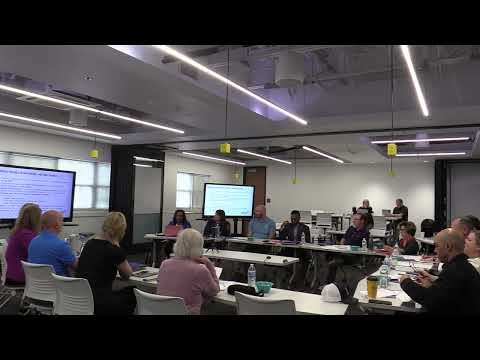
At a March 3 board workshop Jennifer Hannah, Georgetown ISD chief financial officer, presented early projections showing a $3.7 million operating deficit for 2025–26 and proposed options including staff reductions, larger secondary class sizes and targeted program cuts; trustees urged using utilization data before approving cuts.
Georgetown Independent School District leaders told the board March 3 that early budget modeling shows a projected $3.7 million operating shortfall for the 2025–26 school year and outlined a menu of options to close the gap.
“Looking at a deficit of 3.7 million,” Jennifer Hannah, chief financial officer for Georgetown ISD, said during the workshop, stressing the number assumes no compensation increases and is based on preliminary enrollment and property-value estimates.
The presentation used current legislative proposals and local assumptions: a demographer projection of 14,060 students (1.2% growth) and an estimated average daily attendance of 13,076; a preliminary 7% increase in property values (pending certified values from the Williamson Central Appraisal District); and a modeled revenue figure of about $168.4 million with roughly $18.3 million in recapture to the state.
Hannah reviewed how pending legislation could affect the district’s finances. On the Senate side, she outlined Senate Bill 26 (Sen. Crichton), which would create a teacher retention allotment for districts with more than 5,000 students — the bill, as described in the workshop, would provide $2,500 for classroom teachers with three to four years’ experience and $5,500 for those with five or more years, but the allotment would apply only to certified classroom teachers and would not cover aides or employees with zero–two years’ experience. On the House side, the presentation summarized House Bill 2: a $220 increase in the basic allotment (from 6,160 to 6,380) that the district estimated would yield about $3.1 million in revenue, with a statutory requirement that 40% of that increase be used for compensation and 75% of the compensation allocation be directed to teachers.
Trustees and staff discussed options to reduce spending. Hannah presented illustrative cuts that, in combination, would close the modeled gap: eliminating five elementary assistant-principal positions (approximately $300,000), trimming some districtwide positions (≈$300,000), raising middle-school class sizes to 29:1 (estimated $1.26 million savings) and increasing high-school class sizes (estimated $1.38 million savings). A 5% reduction to campus and department budgets was shown as yielding about $411,000. Hannah emphasized these are illustrative scenarios to show scale rather than final recommendations.
Trustees pressed staff for alternatives and for evidence before moving forward. One trustee called the $220 basic-allotment increase presented in HB2 “an insult,” and another warned that the retention allotment could “poach” teachers from nearby smaller districts. Trustee (S5) urged caution about targeting core academic supports: “Where our cuts we’re looking at are … cutting librarians, interventionists, which help with the reading,” the trustee said, arguing that reductions in those areas could harm students’ academic progress.
Hannah and trustees also discussed longer-term revenue strategies: improving attendance, pursuing a master plan for vacant facilities (including potential centralized pre-K), and accepting limited out-of-district transfers at lower-capacity campuses (Frost, Santa Rita and San Gabriel). Staff estimated a best-case addition of roughly 300 transfer students would generate approximately $180,000 at an assumed $6,000 per student — likely insufficient alone to close the modeled deficit.
Board members asked staff to return with program-utilization and cost-per-program analyses at the April workshop and said they wanted clear information about which services are legally required and which are discretionary before endorsing cuts. Staff noted the district can amend the budget if the legislature provides additional funding but flagged the district’s July 1 fiscal year as a timing constraint that reduces flexibility compared with districts that operate on a Sept. 1 fiscal year.
The board also took unrelated routine actions at the start of the meeting: it authorized staff to proceed with the recommended land purchase, and it accepted the certification of unopposed candidates and cancelled the May 3, 2025 trustee election.
The workshop concluded with trustees asking staff for refined numbers and for specific proposals to protect core academic supports while identifying savings; staff committed to returning with program-utilization data and updated budget scenarios in April.