Get Full Government Meeting Transcripts, Videos, & Alerts Forever!
Get email alerts on the City Finance topic
No spam. Unsubscribe anytime.
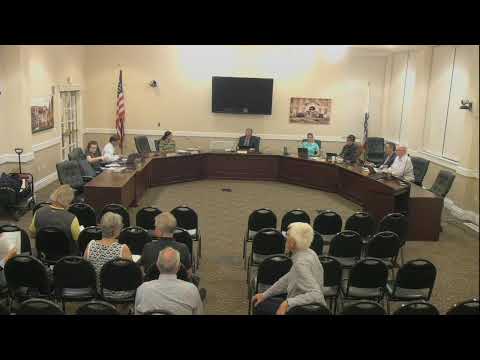
Saint Helena council begins scrutiny of city finances as staff outlines wide-ranging deficit estimates
Summary
Staff presented a summary of fiscal challenges and asked the finance committee for help narrowing a range of possible deficits; public commenters urged more coordination, cautioned against alarmist headlines, and councilmembers directed staff and the finance committee to schedule joint study sessions and further analysis.
City Manager Mister Camillo and finance staff presented an initial, staff-driven summary of actions taken to address fiscal adversity and asked the council to engage the finance committee in a more detailed review of revenue options and spending assumptions.
Camillo told the council the report was intended to "refocus on our city—s budget and long term finances" and emphasized the many assumptions behind the numbers. Staff presented a range of estimates that, depending on which capital needs and liabilities are counted, produced a working deficit range roughly between $6 million and $10 million annually. Key drivers listed in the report included an estimated $3.4 million annual need tied to capital-improvement ambitions, compensation/market-wage adjustments (about $700,000), a prudent annual capital replacement target (about $1 million), and a proposed supplemental payment toward pension liabilities (about $500,000).
Several residents and finance-committee members urged patience and collaboration. Mark Smithers, a long-time finance-committee volunteer, said the committee had already reported many of these items and warned staff against releasing headlines implying an $8.8 million structural deficit without committee vetting. Smithers said the committee is working on more granular estimates and recommended greater coordination before the council finalizes communications to the public.
Finance-committee members and other residents suggested multiple next steps: (1) refine cost-allocation and capital-replacement assumptions, (2) complete a compensation study to define market comparators, (3) evaluate a short-list of potential revenue measures and timing, and (4) consider staged or diversified revenue approaches rather than a single large measure. Councilmembers suggested a joint study session with the finance committee to review assumptions and recommended that staff and the committee produce more digestible, periodically updated forecasts for the public.
Camillo and council members also described several "off-ramps" staff can pursue: sale of city-owned parcels (with receipt of proceeds likely delayed until FY 2026-27), continuing expenditure reductions already enacted (about 8.8% in the current budget cycle), ongoing grant-seeking, and further refinement of CIP priorities. Staff cautioned that revenue from potential hotel or real-estate developments would likely not be available for several years and therefore cannot substitute for nearer-term actions.
The council did not adopt any new revenue measures at the meeting; instead, members asked staff to work with the finance committee on follow-up analysis and to schedule a public study session as the next step. The item concluded with agreement to engage residents in additional outreach about options and timing.
Ending: Council directed staff and the finance committee to continue detailed, joint work on cost allocations, compensation results and possible revenue measures, and to present a more narrowly scoped recommendation at a future study session.