Get Full Government Meeting Transcripts, Videos, & Alerts Forever!
Get email alerts on the Local Government Compensation topic
No spam. Unsubscribe anytime.
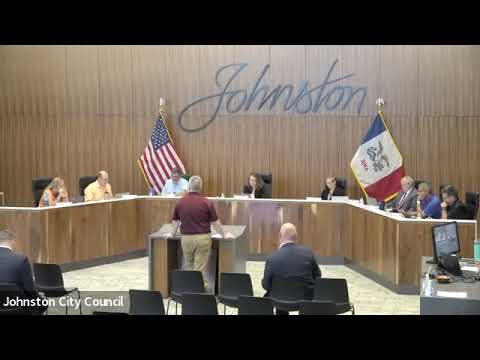
Johnston City Council approves first reading of pay increase for mayor and council
Summary
The Johnston City Council voted on first reading to raise mayor pay to $10,000 and council members to $5,000 effective Jan. 1, 2026, after a lengthy debate over timing, attendance rules and budget impacts; opponents called the timing inappropriate.
The Johnston City Council on May 20 approved on first reading an ordinance to increase mayoral and council compensation, with the change scheduled to take effect Jan. 1, 2026.
City staff told the council the ordinance (Ordinance 11-39) would set mayor pay at $10,000 a year and council member pay at $5,000, and noted Iowa Code allows such a change only after a city general election. Staff said the FY26 budget phases the increase, allocating a half‑year cost in FY26 and the full amount in FY27.
Supporters said the raise modernizes pay that, staff said, has not changed since 2001 and helps the city remain competitive with peer municipalities. “We review compensation constantly for every other position inside the city,” one councilor said, arguing elected officials’ pay should be periodically updated to reflect duties and time commitments to regional bodies such as DART and the MPO.
Council member Reddy urged colleagues to reject the increase, saying he ran to serve rather than to collect pay and contending the city’s budget has other priorities. “Having this compensation come in during this point in time does not make any sense to me,” Reddy said, asking fellow members to vote no.
Councilors discussed whether an ordinance could include attendance-related provisions—such as forfeiting pay after consecutive missed meetings—but staff and the city attorney were not able to provide finalized language during the meeting. Council members asked staff to return with possible ordinance language for future readings.
The vote on first reading passed by roll call; at least one member recorded a no. The ordinance requires additional readings before final adoption.
What’s next: The council will consider the ordinance in subsequent readings, and staff indicated they will supply updated language or options, including attendance provisions, for further consideration.