
Board adopts 2025 revenue ordinance: SSD millage rises 2 mills, solid-waste fee increases to $125
Get AI-powered insights, summaries, and transcripts
Subscribe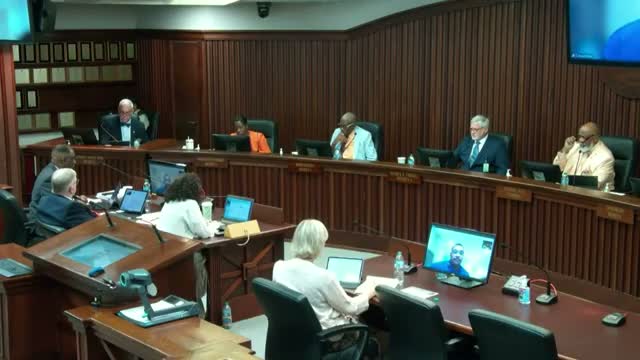
Summary
The Board adopted the 2025 revenue ordinance, raising the Special Service District (SSD) millage from 4.502 to 6.502 mils, increasing the solid‑waste fee from $85 to $125 to make the service self-supporting, and revising multiple departmental fees and caps.
The Chatham County Board of Commissioners approved the 2025 revenue ordinance after staff review and discussion. Key changes recorded in the ordinance included a 2.000‑mil increase in the Special Service District (SSD) millage — from 4.502 mils to 6.502 mils — and a $40 increase in the SSD dry‑trash/solid‑waste fee, from $85 to $125, which staff said was necessary to make the fund self‑supporting given equipment replacement needs.
On the millage: staff explained the SSD increase was intended to fund newly created fire-service obligations in the unincorporated area; the presenter read a list of many line‑item changes across departments. Separately, the Cat District millage was reduced from 1.056 to 0.94 mils.
On solid waste: the solid‑waste representative explained the $85 fee was no longer adequate because the system had been supported previously by interfund transfers that have been constrained. The presenter said there is approximately $4,000,000 in fully depreciated equipment and that grinders and other components cost roughly $1,000,000 to replace; the county expects to replace several vehicles and heavy equipment in coming years. “We have $4,000,000 in equipment that is fully depreciated,” staff said, noting the fund had received transfers in past years ranging from about $676,000 (2023) to $2,700,000 (2024). The fee change was presented as necessary to avoid continued transfers and to fund replacement and ongoing operations.
Other fee and ordinance changes: staff reviewed multiple departmental fee adjustments — passport photos ($14 to $16), changes to records‑copying and video copying fees consistent with state law, removal of a $50,000 cap on land‑disturbing activity fees (staff said the cap underpriced multi‑year large projects), increased floodplain encroachment review fees and higher reinspection/arborist fees. Staff said many fee requests originated in the engineering and solid‑waste departments; commissioners asked staff to return with more detailed rationales for specific increases.
Commission debate and vote: some commissioners objected to raising fees immediately after approving an SSD millage increase, arguing the timing and cumulative burden on residents required care. Commissioner Whiteley and others said the budget previously accounted for the changes; other commissioners stressed the equipment and operations shortfalls that made increases unavoidable. After discussion the board moved to adopt the revenue ordinance; the motion passed by recorded voice vote.
What happens next: the ordinance will take effect according to the county’s adoption schedule and staff said departments would provide follow‑up information for specific fee schedules and implementation details.