Get Full Government Meeting Transcripts, Videos, & Alerts Forever!
Get email alerts on the Education K12 topic
No spam. Unsubscribe anytime.
Middle school leaders outline behavioral thresholds and start academic MTSS work
Summary
District staff presented two primary middle-school goals for 2025–26: behavioral thresholds tied to documented incidents and an academic MTSS (Multi-Tiered System of Supports) framework, noting early-stage progress, recent staff turnover, camera and technology updates, and a lapsed school mental-health grant.
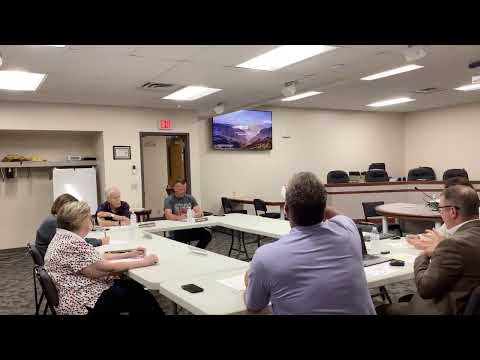
At a committee-of-the-whole meeting, district staff presented the middle school's two priority goals for the 2025–26 school year: reduce behavioral incidents within defined thresholds and implement an academic MTSS framework to guide screening, interventions and progress monitoring.
An unidentified school presenter said the behavioral goal sets explicit targets by enrollment percentage: more than 80% of students should have 0–4 documented incidents, fewer than 15% should have 5–9 incidents, and fewer than 5% should have 10 or more. The presenter also provided a three‑year snapshot of discipline data and said, as of the meeting, the school had 13 major incidents and 123 minor incidents, with 85.2% of students showing zero incidents to date.
On academics, staff described a staged MTSS rollout that will define decision rules, screening tools and tiered interventions. The math team has reserved time at the start and end of the day for targeted intervention, using data to determine which students receive three- to four-week focused supports; language-arts staff are using CLSD grant funding for professional development in the science of reading and will evaluate materials and coaching needs over the next several years.
Staff also described several strategic-plan items related to student safety and instruction: replacing 14 aging coaxial cameras (the district currently operates two camera systems), adding keyless entry at building entrances, and introducing professional development on artificial intelligence. The presenter said the district lost a mental-health partner (Blue Veil Behavioral Health) after a state grant expired and that staff are seeking new local agency partnerships to provide school-based mental-health services.
Board members asked clarifying questions about the '30%' progress figure on one academic goal; the presenter characterized that percentage as an early-stage estimate — the work is at the "footsteps" of development and will evolve rather than being a single completed item.
The district emphasized the data will be reviewed by grade-level and core cohorts as the MTSS team refines interventions and identifies where reteaching or individual plans are needed. Staff asked the board to identify any additional data or focus areas to inform the next steps.
The meeting moved on after questions; no formal actions were taken on the strategic-plan material at this session.