Get Full Government Meeting Transcripts, Videos, & Alerts Forever!
Get email alerts on the Bond Planning topic
No spam. Unsubscribe anytime.
Arlington ISD outlines fast-track plan for a smaller bond, approves oversight charge after audit debate
Summary
Trustees reviewed a staff plan for a possible smaller bond referendum with an aggressive Oct'Feb timeline to form a citizens steering committee and target maintenance/security/technology needs; the board debated removal of "maximize the 2019 bond" language and audit duties from the Citizens Bond Oversight Committee charge before approving the revised charge 7'0.
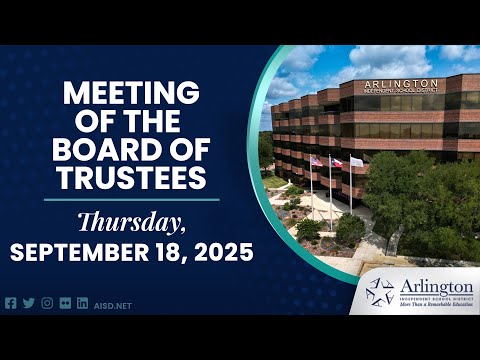
The Arlington ISD Board of Trustees on Sept. 18 heard a district plan for moving swiftly toward a smaller bond referendum and approved changes to the Citizens Bond Oversight Committee's (CBOC) charge after extended debate about oversight and audit language.
Kelly Horner, assistant superintendent for facility services, told trustees the district is finishing facilities assessments, demographic studies and enrollment-capacity work that would inform a citizen-led steering committee if the board chooses to pursue a bond. Horner said the window to prepare for a February referendum would require community input, a short series of steering-committee meetings and final reporting to the board by January, adding that "the real heavy work" would fall between mid-October and December.
"We haven't decided to call a bond," Superintendent Doctor Smith said, urging the board that forming a capital needs steering committee would let staff and community members study options without committing the district to an election. Horner and Smith emphasized the plan under discussion is intended for a smaller, targeted package covering items such as technology and device refreshes, buses, safety and targeted facilities work rather than the larger 2019 bond.
Trustees raised concerns about the tight schedule for assessing 77 campuses and annexes. Trustee Miss Richardson called the proposed timetable "very quick" for a district of the size of Arlington ISD; Horner said the district is building on an existing needs assessment and consultants' work to narrow scope for a shorter package. Trustee Mister Wilbanks recalled the district's longer-term planning and said the new effort would build on the 2014/2019 master plan rather than replace it.
Trustees also weighed how bond dollars would fit within district finances. Doctor Smith and staff estimated roughly 80% of the district's roughly $650,000,000 budget goes to salaries and benefits, leaving about 20% for operations and capital needs, a point trustees cited in discussing what a smaller bond could reasonably address.
Oversight debate and vote
A lengthy discussion about the CBOC charge followed the bond briefing. Trustee Wilbanks and others objected to removing language that formerly asked the committee to "maximize the potential of the 2019 bond" and questioned whether audit-review language was omitted. Supporters of the revision, including current committee chairs and staff, said the edits were intentional to clarify that CBOC's role is oversight and receiving audit results rather than securing or leading external audits.
After a motion to table the charge failed by a 3-4 vote, trustees ultimately approved the revised CBOC charge 7-0. Trustee Wilbanks said he would have preferred keeping the "maximize" language but acknowledged the revised charge retains language about determining allowable uses of excess bond funds and receiving audit reports.
What happens next
Staff said the next step is bringing a charter for a capital needs steering committee to the board at the next meeting for consideration, and that the board could vote to proceed or stop the process later if the January report did not support a February referendum. Horner reiterated that the timeline is aggressive but feasible if the board wants to pursue a smaller, targeted bond package.
Trustees also approved, without change, a separate Financial Futures Committee charge earlier in the meeting and voted to allow use of job-order contracting for smaller bond projects in phases 4 and 5 after trustees discussed procurement safeguards and RSMeans-informed pricing.