Get Full Government Meeting Transcripts, Videos, & Alerts Forever!
Get email alerts on the Student Affairs topic
No spam. Unsubscribe anytime.
Austin Peay Student Affairs reports retention gains, new internship grant and expanded basic‑needs support
Summary
Dr. Leonard Clemons told the Student Affairs Committee the division’s annual impact report documents a $50,000 internship grant, expanded dining and childcare capacity, increased SNAP enrollments and higher retention for a first‑year cohort; the report was informational and required no action.
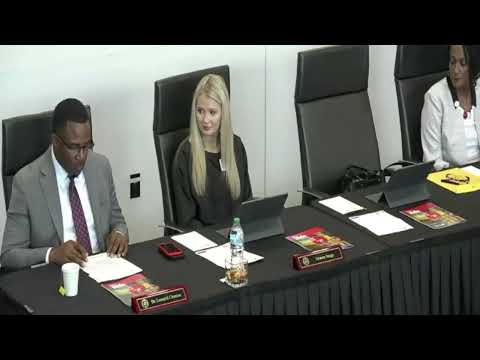
Dr. Leonard Clemons, vice president for student affairs at Austin Peay State University, presented the division’s annual impact report to the Student Affairs Committee and highlighted a $50,000 grant to launch a paid internship program, higher meal‑plan participation, expanded childcare capacity and stronger basic‑needs outreach.
The report, distributed as the committee’s Impact magazine, described several campus developments that university officials say aim to improve student success and well‑being. Clemons said the Career Success Center received a $50,000 grant “in partnership with Workforce Essentials and Workforce Development of Montgomery County” to create a 10‑week paid summer internship program. He also credited a new dining venue in Catherine Evans Harwell Hall, operated with Sodexo, for contributing to “just under 15,000 meal swipes per month” and a meal‑plan participation increase of about 8 percent.
Clemons emphasized retention and early‑arrival supports as a priority. He described the Governor’s Success Institute, a week‑long early arrival program for first‑year residential students, reporting “a 98% fall‑to‑spring retention” for that cohort and a 45 percent increase in students reporting they felt strongly prepared for their first year at Austin Peay. Clemons said the university will welcome a second cohort in the coming fall.
The presentation also covered student basic‑needs efforts. Clemons said student‑affairs staff visited campus spaces to connect students with benefits and resources, helping “over 70 students” enroll in SNAP in Tennessee and identifying additional students eligible for Medicare benefits. He reported the campus food pantry saw just over 4,600 visits (an 86 percent increase), counseling recorded over 3,000 sessions (a 37 percent increase) and the university recreation center logged about 95,000 visits with a 14 percent rise in student usage.
Other highlights included the Helping Elf holiday gift program’s 30th year, which Clemons said has supported more than 1,400 children through volunteer donations; the Allstate student newspaper’s 95th anniversary; and an increase of 9 percent in fraternity and sorority membership, whose members posted an average GPA just over 3.0. Clemons said the division launched an advisory council and hired Victor Phelps as the inaugural director of philanthropy to expand fundraising and donor engagement.
The report was presented as an information item; Clemons closed by thanking student‑affairs staff and marketing/PR for producing the impact materials and invited questions. The committee offered thanks and no committee motions or follow‑up actions were recorded. The meeting adjourned without formal action on the report.