Get Full Government Meeting Transcripts, Videos, & Alerts Forever!
Get email alerts on the Special Education Funding topic
No spam. Unsubscribe anytime.
Rising special‑education needs drive tuition‑tax discussion as board readies stress test
Summary
District staff cited steep growth in special-education needs — including a 400% rise in autism identification in one area — and recommended a tuition-tax target of about $25.8 million (17.59¢) with staff committing to stress-test projections and review contracted-placement costs.
Appoquinimink School District officials on June 25 told the board that sharply rising special-education needs and associated placement and contracted-service costs are a major driver of next year's budget and a central reason staff proposed a tuition-tax yield of roughly $25.8 million.
Superintendent Matt said the district's special-education department previously presented evidence of dramatic increases in identified needs. "Back in April, our special education department gave a presentation just showing the 400% increase that we're seeing in just 1 area, students identified with autism," Matt said, describing how demand and associated expenses have risen faster than formula-based reimbursements cover.
What the tuition tax covers
Staff explained that the tuition tax funds in-district intensive services, out-of-district placements and tuition billed to and from other districts. Examples given during the workshop included the Delaware School for the Deaf and the Brennan School, both programs that can require district payments when students are placed there.
Board members pressed staff on how the district will 'stress test' the tuition-tax projection to avoid underbudgeting next year. Staff said the stress test will account for projected population growth, contracted services (for example psychologists), tuition-billing flows with other districts, and recruitment/compensation pressures for specialized staff. Staff committed to working with clinical and program leadership to validate the assumptions.
Links to workforce pressures
Presenters tied the rising special-education costs to broader staffing and market pressures. The superintendent noted a national teacher shortage and vacancies in specialized roles, and said the district has used bonuses and stipends to retain and fill positions — a measure that raised recurring payroll costs and factored into the tuition projections.
Next steps
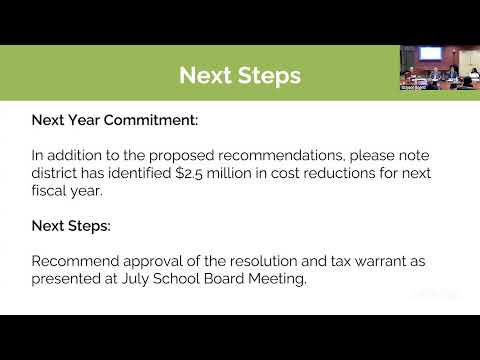
Staff will revisit the tuition-tax estimate after additional review and when updated assessment data arrive from New Castle County. The board asked staff to triple-check assumptions and to include clinical leaders in the stress-testing process before the July 8 rate-setting meeting.