Get Full Government Meeting Transcripts, Videos, & Alerts Forever!
Get email alerts on the Student Health topic
No spam. Unsubscribe anytime.
District nurse: health-office visits rose to 18,064 last year; school nursing team outlines services and billing
Summary
Melissa Bright, the district nurse, told the Alexandria Public School District board that health-office visits rose to 18,064 last year and described staffing, chronic-condition management, screenings and the district—s third-party billing for some services.
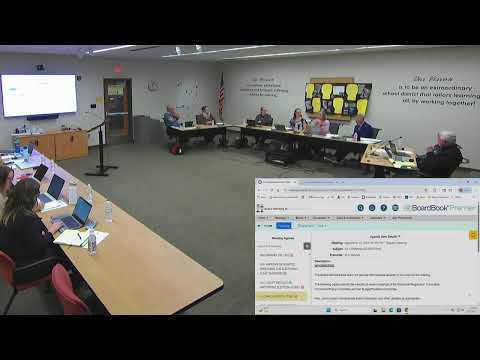
Melissa Bright, the Alexandria Public School District—s licensed district nurse, told the school board on Sept. 22 that students visited school health offices 18,064 times last year, up from about 17,000 the year before, and described how the district provides medical support for students.
—My goal is to keep these kids in school, keep them learning,— Bright said, summarizing the district—s approach to health services and why on-site care matters for attendance and learning.
Bright said the district has four nurses supported by several LPNs and unlicensed assistive personnel, an RN at Lincoln School who returned last year, and a medical advisor who signs standing protocols, including stock-epinephrine and Narcan procedures. She reported roughly 9,000 total medication doses given last year (including about 768 over-the-counter or as-needed doses) and about 1,450 vision and hearing screenings that produced roughly 83 referrals.
The nurse identified the main categories of managed health plans that require individualized care plans and staff training: diabetes, asthma, anaphylactic food and insect allergies and celiac disease. Bright said the district continues to refine documentation practices (which contributed to the higher visit count) and that some decreases in recorded asthma reflect follow-up to confirm whether diagnoses remain clinically significant.
Bright described operational items the district manages: immunization tracking (a state report due Dec. 1), AED maintenance, accident reporting, and a —Have a Heart— fund used to help students pay for essentials such as glasses or hearing-aid repairs. She said the district coordinates volunteer and community partnerships for screenings, naming ATC nursing students, the Sertoma Club and the Lions Club as longtime partners.
On billing for services, administrators explained the district is using third-party medical-assistance billing for services provided as part of individualized education plans: speech, occupational and physical therapy, some licensed social-worker mental-health services and other billable nursing supports. District staff said the principal purpose of those medical-assistance dollars is to keep medically eligible students in school and to support medically fragile students.
Bright said the district is working toward an online staff health manual and aims to improve completed referrals for vision and hearing screening to an 85 percent completion rate. She closed by noting several routine health programs the district operates and solicited questions from board members.
Next steps: no formal board action was requested. Administrators said they will continue implementing billing processes and online materials and will report back on improvements to referral completion rates.