Get Full Government Meeting Transcripts, Videos, & Alerts Forever!
Get email alerts on the Adult Education topic
No spam. Unsubscribe anytime.
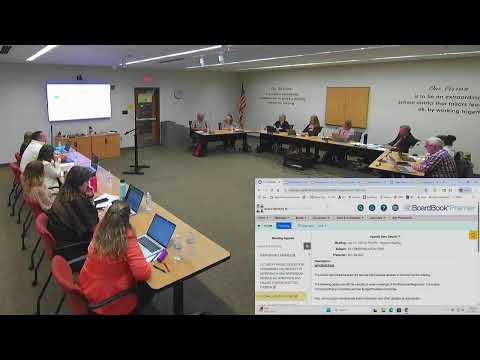
Alexandria ABE staff describe growing adult education services; learners share success stories
Summary
Presenters told the Alexandria Public Schools board that the Alexandria Area Adult Basic Education consortium serves learners across 11 districts with GED, ESL and career‑focused courses, reporting a 16% increase in contact hours and naming recent grants and donations supporting student participation.
Julie Fitec, adult education coordinator, told the Alexandria Public Schools board that the Alexandria Area Adult Basic Education consortium — which serves 11 school districts — offers free GED and adult diploma programs, English and citizenship classes, and career‑focused courses to help adults enter or advance in the workforce.
"We are the consortium lead for 11 school districts," Fitec said, describing year‑round day and evening classes delivered in person and online and partnerships with regional agencies. She said the consortium served about 308 learners last year with roughly 8,320 learner contact hours and that contact hours increased by about 16% compared with the prior year.
Fitec identified the program’s funding sources as state and federal grants and described specific recent support: a grant application for $7,500 to support a fifth‑ and sixth‑grade math program, a $2,500 donation to the HOSA program from Knut Nelson (noted in the presentation as "now known as VIVI") to help send students to a national conference, and a $12,500 grant to adult basic education from United Way of Hope and Douglas Counties to address food insecurity, Chromebook rentals, Burlington English licenses and professional development.
Two learners who attended classes shared personal accounts. Madeline Esthetavaria said she came from Cuba two years ago and joined ABE to learn English. "I have learned a lot at ABE. I am very grateful because ABE has not only been a school for me, it is also being my second home," she said. Maria Forsberg described using ABE to earn a U.S. high‑school‑equivalent credential and then complete a Child Development Associate (CDA) credential; she said ABE helped her become a preschool teacher.
Board members asked whether recent legislative or federal grant changes would affect the program’s budget. Fitec said the regional online career collaborative is federally funded and could look different if those funds do not continue, but that enrollment and contact hours have increased and that budget on that line has grown this year.
The presentation closed with a reminder that ABE accepts learners 17 and older (not enrolled in K–12) and that services are free and confidential. The board did not take formal action on the presentation but thanked presenters and learners for their remarks.
The district’s community education adult enrichment coordinator also described programming that reaches thousands of residents annually through hundreds of seasonal courses that use district facilities and partner organizations.