Get Full Government Meeting Transcripts, Videos, & Alerts Forever!
Get email alerts on the Fire Services Insurance topic
No spam. Unsubscribe anytime.
Glade Creek Fire Department outlines plan and costs to lower insurance rating; asks county for support
Summary
Fire officials presented a plan to lower the district’s insurance rating, citing gaps in water points, communications and equipment. They outlined a January 2026 inspection target, equipment costs (radios about $7,000; SCBA ~$10,000), and projected insurance savings if ratings drop.
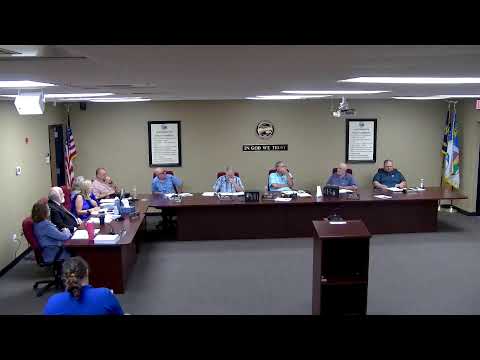
Chief David Higgins of the Glade Creek Fire Department opened a presentation to the Alleghany County commissioners on July 8 about what it would take to lower the department’s insurance rating and reduce homeowners’ and businesses’ insurance premiums.
Retired chief Lee Sudia, who led the technical briefing, said the state’s modified ISO rating (administered by the North Carolina Office of the State Fire Marshal, NCOSFM) allocates roughly 50% of credit to the fire department, 40% to water supply and 10% to communications. Sudia said communications is a “pure 10%” and that current county radio reception is “nonexistent” in parts of the district. He recommended Viper-system radios and additional repeaters to improve coverage.
Sudia and Higgins described specific needs and costs: a Viper-capable radio is roughly $7,000, a self-contained breathing apparatus (air pack, tank and mask) about $10,000, turnout gear $2,000 per set, and 5-inch large-diameter hose costs about $7 per foot. Sudia said his district has identified 64 water points to support ratings work and expects to narrow that list to the most reliable sites. He told the board the department hopes to be ready to request an NCOSFM inspection by January 2026 but would need several years of records and likely some county support for equipment and communications upgrades.
Sudia characterized the potential benefit to residents: “For each rate reduction, commercial and residential customers in our district will see an insurance rate reduction of 12% compounded,” he said, describing how rating drops compound across moves from 9 to 8 to 7 to 6. He also warned that fully staffing multiple stations with career personnel would carry “astronomical” cost implications and that many improvements will rely on volunteers, donations and selective purchases.
Commissioners asked technical questions about water-point radius, dry hydrants and drafting from ponds; Sudia replied that NCOSFM looks at water-point spacing (roughly one water point every three linear road miles) and that drafting from ponds is feasible with proper equipment. Chief Higgins and Sudia requested that the county consider funding targeted items — radios, some equipment and possible small compensations for volunteers’ fuel and minor expenses — rather than full career staffing.
Next steps: officials said they will share the presentation slides and contact information with staff, continue preparing records, and aim to submit for inspection in early 2026; the meeting produced no immediate county appropriation but flagged the subject for future budgeting.