Get Full Government Meeting Transcripts, Videos, & Alerts Forever!
Get email alerts on the Animal Welfare topic
No spam. Unsubscribe anytime.
Collier County revamps Domestic Animal Services advisory board and updates animal control rules
Summary
After months of review, the board approved restructuring the Domestic Animal Services advisory board (membership and quorum changes) and adopted amendments to animal control and standards-of-care ordinances, with commissioners directing clearer agendas and better staff support for the advisory group.
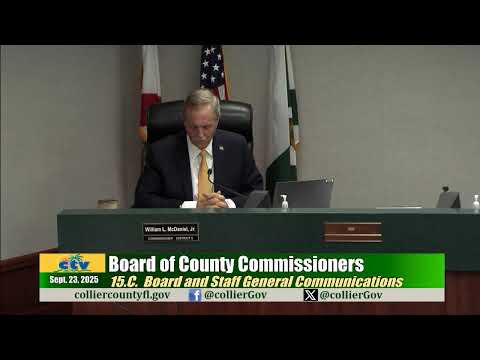
The Collier County Board of County Commissioners on Sept. 23 approved a set of changes to the Domestic Animal Services (DAS) advisory board and related animal control and standards‑of‑care ordinances intended to increase the advisory board’s functionality and clarify roles.
Staff recommended ordinance revisions to restructure the DAS advisory board, clarify the advisory committee’s powers and duties, and update appointment and composition rules. Commissioners discussed reducing vacancies, improving member recruitment, and balancing representation (district appointees and at‑large seats). The board ultimately directed that the advisory committee be set as a seven‑member body with commissioners appointing members by district and two at‑large seats; a quorum of three members was authorized initially to allow the existing four active members to meet and advise while the remaining seats are filled.
Commissioners and staff emphasized the need for better advance distribution of agendas and backup materials to advisory‑board members to avoid the inconsistent participation and “garbage in/garbage out” outcomes described by an interim DAS chair who testified. Staff committed to providing agendas and supporting documents at least one week in advance and to sending revised ordinance language to the board and the advisory committee.
The board also approved two companion ordinances amending the county’s animal control ordinance and the standards of care for animal‑related businesses, breeders and rodeos. Staff said the ordinances align code enforcement activity with state statutes and give special magistrates clearer authority in matters such as animal cruelty and fines.
Public comment included pleas from local rescue organizations to ensure that volunteer groups and smaller rescue partners remain able to serve on advisory panels. Commissioners agreed to include conflict‑of‑interest safeguards in procedures so that organizations that receive county funding would be excluded from participating in recommendations on the budgetary items that could directly benefit them.
The ordinances and advisory‑board changes passed unanimously. Commissioners asked staff to circulate the revised ordinance text and to work with the advisory board to improve meeting scheduling, staffing and participation.