Get Full Government Meeting Transcripts, Videos, & Alerts Forever!
Get email alerts on the Everglades Airpark topic
No spam. Unsubscribe anytime.
Everglades Airpark: county reports rising operations and outlines options to boost revenue and resilience
Summary
County staff reported stronger flight activity at Everglades Airpark in 2025 and outlined repair and revenue strategies. Trinity Scott said operations are up 27% Jan–July 2025 vs 2024; repairs to hangars and resilient floodproofing are estimated at about $1.3 million; community groups (AOPA, Friends of Everglades Airpark) described volunteer efforts to expand activity and pilot outreach.
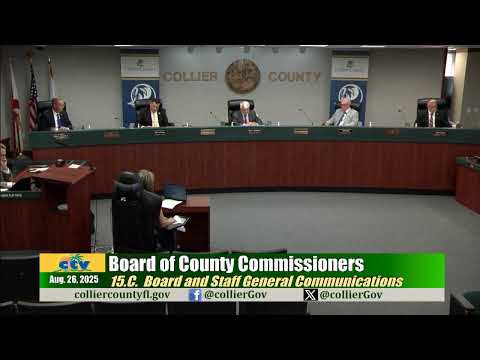
Collier County staff briefed the Board of County Commissioners on Aug. 27 on the Everglades Airpark’s operations, repair needs and revenue opportunities. Trinity Scott, head of Transportation Management Services, said the airport has seen a rebound in activity: January through July 2025 logged roughly 2,700 operations, a 27% increase from the same period in 2024.
Scott reviewed the airport’s financials and capital needs: the airport has run a historical loss (2024 closed at a $154,000 deficit), fuel sales after restoring full fueling in July generated about $4,700 to date (gross sales), and the county has accepted approximately $4.4 million in FAA and FDOT grants historically that could carry obligations if uses change. Scott estimated necessary resilient repairs for hangars and floodproofing at just under $1.3 million and said tee‑hangar repairs would run roughly $53,000 using 2024 rates.
Staff said options to increase revenue include: making tee‑hangars tenant‑ready (basic shells for tenants to finish), leveraging fuel sales and special events, adding merchandise and visitor concessions aimed at visiting pilots, pursuing a basic NPIAS reclassification (requires 10 based aircraft, up from current two) that could unlock entitlement grants, and exploring a small property acquisition adjacent to the airport for expansion and additional tie‑downs.
Community groups were active in the discussion. Stacy Heaton of AOPA led an ad hoc committee and said AOPA and a newly formed Friends of the Everglades Airpark (a 501(c)(3)) have organized community events and pilot outreach, including a July pancake breakfast that brought 33–35 planes and helped market the airport. Paul Sims (Friends of Everglades Airpark) described volunteer efforts, local business partnerships (golf‑cart/scooter rental and transportation options), and the group’s plans to promote future aviation events.
Commissioners emphasized modest, targeted investment: several members urged inexpensive hangar shells with tenant fit‑out options and stressed that fuel and hangar rentals are the primary revenue drivers. The board thanked staff for the update and asked for continued work on cost‑estimates and solicitation timelines for repairs.
Ending: Staff will return with repair specifications and procurement timelines and continue to coordinate with AOPA and the Friends group on community engagement and revenue strategies.