Get Full Government Meeting Transcripts, Videos, & Alerts Forever!
Get email alerts on the Religious Displays topic
No spam. Unsubscribe anytime.
Collier commissioners authorize county attorney, manager to place Ten Commandments in curated exhibit after heated public hearing
Summary
After more than two hours of public comment and legal debate, Collier County commissioners voted 4–1 to authorize the county attorney and county manager to work with a donor and staff to place a donated Ten Commandments display in an appropriate government center exhibit alongside other historical documents, with placement and version determined administratively.
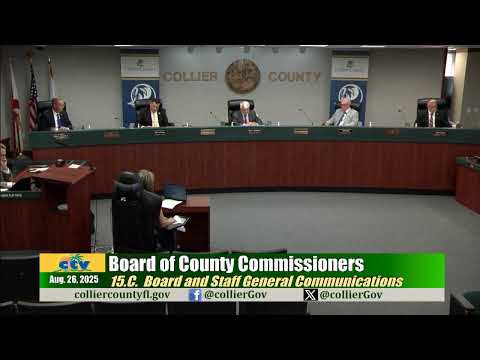
A divided Collier County Commission authorized county staff on Aug. 27 to work with a donor and county attorneys to place a donated rendition of the Ten Commandments in a curated exhibit of founding documents in county government buildings.
The proposal, brought by Commissioner Chris Hall, called for the Ten Commandments to be displayed “as part of a larger exhibit depicting the foundations of American law and government” alongside items such as the Declaration of Independence and the Bill of Rights. Hall said the intent was historical and civic, not religious.
The item drew an unusually large public hearing: commissioners heard from 37 registered speakers in the room and on Zoom. Speakers opposed and supportive of the display told the commissioners the issue toes constitutional, civic and fiscal lines. Opponents—including representatives of interfaith and civil‑liberties groups—urged rejection, saying the exhibit would favor one faith over others and risk costly lawsuits. Supporters argued the tablets have historical influence and said they would remind residents of shared civic values.
Several speakers cited court precedent. Opponents raised decisions such as McCreary County v. ACLU and the tests courts apply to establishment‑clause disputes; supporters pointed to Van Orden v. Perry (2005) and other contexts in which courts have allowed religious texts in historical tableaux. Commissioners and staff repeatedly said legal analysis guided their consideration.
Commissioner debate focused on legal risk, fiscal exposure from likely litigation, community inclusion, and whether accepting a donated, single artwork would amount to government endorsement. Commissioner Paul McDaniel said the board’s responsibility was to weigh public‑interest impacts and legal exposure; other commissioners emphasized both free‑speech and religious‑neutrality concerns.
Chairman Tony (Paul) Saunders moved that the county attorney and county manager be authorized to determine the appropriate version and placement of the donated Ten Commandments and manage logistics (including whether it should be part of a broader exhibit), with the attorney drafting any needed display parameters. The motion passed 4–1.
Commissioners said the goal is a single, balanced exhibit—similar in concept to displays in federal buildings—placed in appropriate county government centers. The motion does not commit the county to mass production or placement in schools; staff clarified any action in schools would be outside county authority.
Next steps: the county attorney and county manager will identify the version and location(s), finalize display language, and coordinate a placement plan. The board will be kept informed of costs and legal analysis; commissioners said they expect the manager and attorney to consult them if novel issues arise.
Ending: The formal decision was an administrative authorization rather than an immediate installation; staff will return with implementation details and any budget or legal recommendations if needed.