Get Full Government Meeting Transcripts, Videos, & Alerts Forever!
Get email alerts on the Public Safety topic
No spam. Unsubscribe anytime.
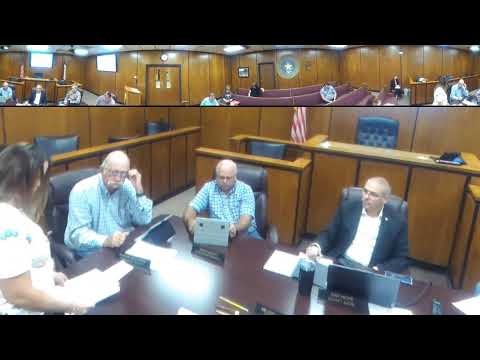
Scurry County discusses drafting ordinance to regulate game rooms; enforcement and grandfathering raised as concerns
Summary
County officials debated whether to create a local ordinance to license and regulate game rooms—covering permit fees, machine‑stamping, window visibility, and enforcement capacity—then agreed to pause and have staff (Trey/sheriff's office) review model ordinances and enforcement options before crafting regulations.
Scurry County commissioners discussed beginning a process to create ordinances to regulate game rooms operating in the county after several operations appeared locally. Speaker 2 raised the issue and urged the court to consider licensing and fees similar to some city approaches; Speaker 4 said regulation could deter operations but enforcement presents logistical challenges (SEG 874–886, 900–912).
The discussion focused on enforceability and financial-penalty options. Commissioners referenced other jurisdictions’ fees and approaches: Speaker 2 said a city example charges $2,500 annually plus $500 per machine, while Speaker 4 and Speaker 11 referenced higher fee examples (one cited $10,000) that may have been used elsewhere. Participants noted that imposing fees on existing operations raises ex post facto and takings concerns and that a grandfathering approach might be necessary for facilities already in operation (SEG 1019–1032, 1078–1088).
Law enforcement and prosecution capacity were recurring concerns. Speaker 3 cautioned that imposing rules without a clear enforcement plan would be “onerous” and asked who would issue citations, prosecute violations, and handle accounting requirements for machines and cash payouts. The court agreed to table the matter until Commissioner Trey and the sheriff review packet examples and enforcement implications so the court can return with a feasible, enforceable plan (SEG 1060–1070, 1168–1172).
Next steps: court directed staff to review model ordinances and enforcement pathways and to return with recommendations and draft language for the commissioners to consider.